🥚 Egg Calorie Calculator
Estimate calories, protein, fat, and cholesterol by egg size, whole eggs, whites, yolks, added cooking fat, and recipe portions.
Use the egg part choice to count whole eggs, whites only, yolks only, or a custom mix of whole eggs plus extra whites and yolks.
| Egg Size | Weight | Calories | Protein | Fat | Cholesterol |
|---|---|---|---|---|---|
| Peewee | 35 g | 50 | 4.4 g | 3.4 g | 130 mg |
| Small | 38 g | 54 | 4.8 g | 3.6 g | 141 mg |
| Medium | 44 g | 63 | 5.5 g | 4.2 g | 164 mg |
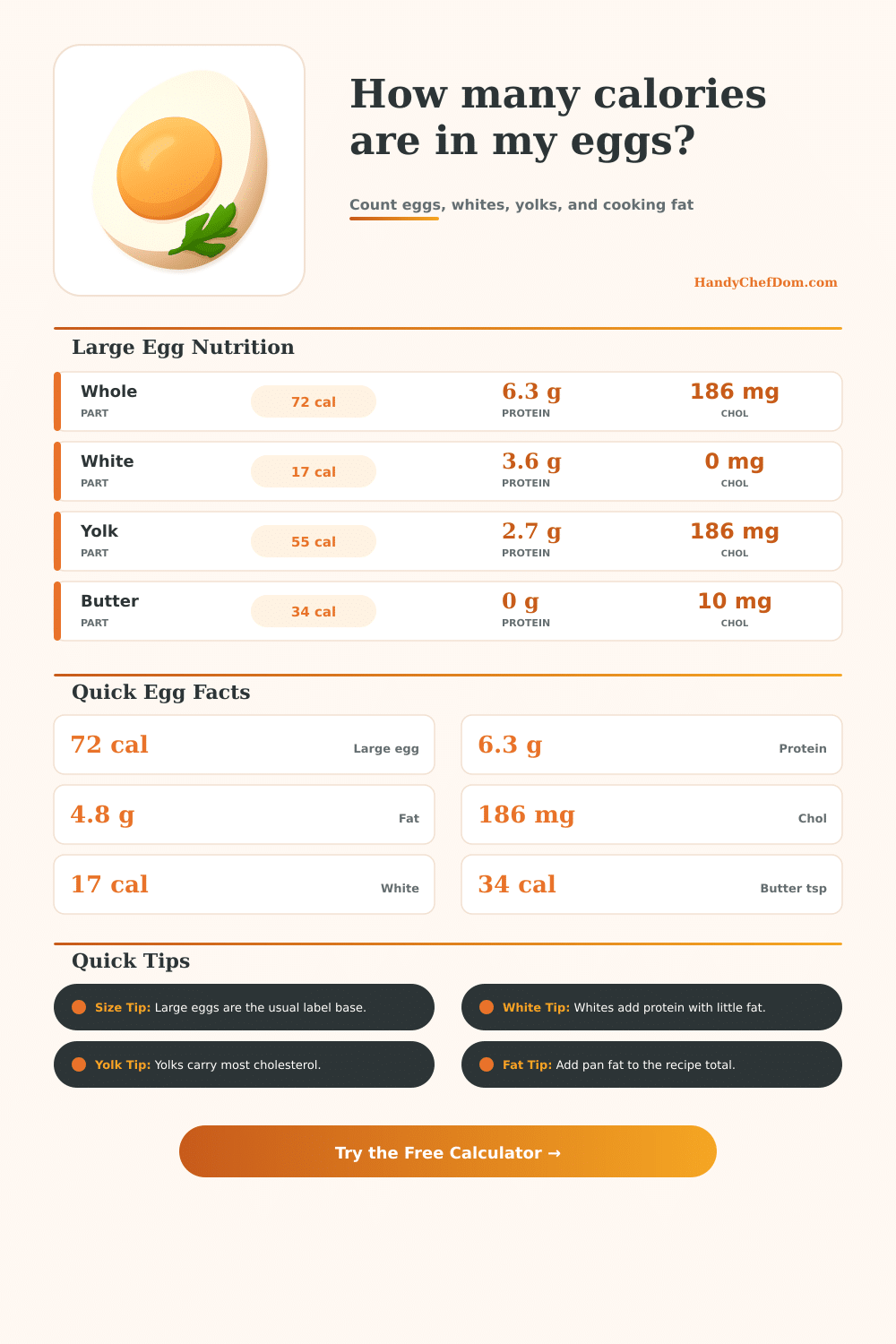
| Large | 50 g | 72 | 6.3 g | 4.8 g | 186 mg |
| Extra large | 56 g | 80 | 7.0 g | 5.3 g | 208 mg |
| Jumbo | 63 g | 90 | 7.9 g | 6.0 g | 234 mg |
| Large Egg Part | Calories | Protein | Fat | Cholesterol |
|---|---|---|---|---|
| Whole egg | 72 | 6.3 g | 4.8 g | 186 mg |
| Egg white | 17 | 3.6 g | 0.1 g | 0 mg |
| Egg yolk | 55 | 2.7 g | 4.5 g | 186 mg |
| Two whites | 34 | 7.2 g | 0.2 g | 0 mg |
| Two yolks | 110 | 5.4 g | 9.0 g | 372 mg |
| One whole plus one white | 89 | 9.9 g | 4.9 g | 186 mg |
| Cooking Fat | Amount | Calories | Fat | Cholesterol |
|---|---|---|---|---|
| Butter | 1 tsp | 34 | 3.8 g | 10 mg |
| Olive oil | 1 tsp | 40 | 4.5 g | 0 mg |
| Avocado oil | 1 tsp | 40 | 4.5 g | 0 mg |
| Coconut oil | 1 tsp | 39 | 4.5 g | 0 mg |
| Cooking spray | 1 sec | 5 | 0.5 g | 0 mg |
| None | 0 tsp | 0 | 0 g | 0 mg |
| Recipe Example | Egg Mix | Portions | Calories Each | Protein Each |
|---|---|---|---|---|
| Simple plate | 2 large whole | 1 | 144 | 12.6 g |
| Lean plate | 4 large whites | 1 | 68 | 14.4 g |
| Omelet for two | 4 whole eggs | 2 | 144 | 12.6 g |
| Egg cups | 8 whole eggs | 8 | 72 | 6.3 g |
| Frittata | 10 whole eggs | 6 | 120 | 10.5 g |
| Custard base | 6 yolks | 6 | 55 | 2.7 g |
Eggs are different, most of us eat them as if they were all exactly the same. Eggs is just like slices of bread or cups of coffee, pick up two and fry them because you have two eggs. But it’s not so simple.
Egg size vary, cooking fat adds hidden calories, and separating out your yolk and white make a difference nutritionally. Guessing means making mistakes when tracking your macros. A jumbo and a medium egg can weigh almost 30% differentally. That adds up to big variation in calories and protein during the course of a week.
Why Using an Egg Calculator Is Helpful
After typing in what kind of portion size and egg size you eat, calculator does all the work (above). No more having to memorize USDA tables for every possible poultry grade. That’s a minor convenience, but getting rid of guesswork that sabotages diet tracking help. The trick is to pick the correct beginning place.
Chances are, if you buy carton eggs, you’re nearly always eating large eggs, unless specified otherwise on the carton. Stick with large as default. Underestimate intake if you feed larger jumbos, or overestimate if you serve a crowd including people who like big eggs.
Why aren’t egg whites and egg yolks the same? They’re used differently in diet: whites are mostly pure protein and water, with minimal fat. They is perfect for building a volume of food while keeping calories down. Yolk contains most of the cholesterol as well as all the vitamins and fats. Switching some of your eggs to extra whites (while keeping whole eggs) is great if you’d like to reduce calories but still be full.
On the other hand, sometimes you want yolk, for example, for its emulsifying action in making custards, or just for its healthy fats. And that’s where this tool comes in: you can combine exactly what you need from each part. Model a breakfast consisting of two whole eggs and four extra whites without doing mental arithmetic.
And then we have the actual contents of the pan. Butter has saturated fat and about thirty-four calories per teaspoon (and it tastes great). Olive oil and avocado oil has the same number of calories but slightly different fatty acids. Why should the cooking fat factor in? Most people don’t think of it as part of the egg. They simply view a shiny surface in the skillet as being “part of the cooking.”
If you add two tablespoons of butter to a family-size scramble, that’s more than sixty calories right there. Enter the cooking-fat variable on the calculator. That way, at least your total numbers will be based off what actually ends up on the plate, not the original uncooked ingredients.
Third, portion sizes is hard to estimate. For example, you can’t just take that giant egg casserole you baked for six people and stuff it into yourself. Estimate what each person get. How many grams per portion? Figure out how much you get from the total recipe, divided by servings. That will give you a good idea of your intake.
A rough estimate of your weekly average is better then obsessively trying to track the exact details of a single egg. It’s less helpful to obsess over one meal but ignore the other meals (or the fact that some days you’ll have small portions and others large ones).
The tool also has some nice reference tables embedded. These can help if you want to stay prepared with a quick lookup table to check your favorite mixes, or if you just want to know what the standards are: Knowing that the yolk has almost as much protein as the whole egg, even though most of the cholesterol is in there, helps you make better choices. Do not fear any nutrient; just match it with your goals.
Bottom line: eggs can fit into nearly all constraints in a kitchen, and that makes them versatile. Whip up an omelette on-the-fly? Meal-prep some high-protein cups for later? Knowing the ingredients keeps things consistent. Let our calculator do the math so you can focus on cooking. No need to second-guess each gram. Meal planning keeps you on the right path. You should of doing this to keep things simple and avoid complexity.