Hot Pot Calories Calculator for Broth, Meats, and Dips
Estimate total pot calories, per-guest share, and bowl impact by combining broth base, sliced proteins, tofu, noodles, and dipping sauce volume.
Broth first: pick your soup base, then layer meats, seafood, tofu and noodles. Sauce spoons are tracked separately so dip-heavy bowls stay realistic.
| Broth | kcal/100ml | Pot cue | Flavor load |
|---|---|---|---|
| Clear kombu | 8 | Light start | Subtle |
| Tomato | 18 | Bright bowl | Tangy |
| Mushroom | 20 | Earthy pot | Umami |
| Bone broth | 35 | Rich soup | Savory |
| Spicy mala | 42 | Bold pot | Oily heat |
| Add-in | kcal/100g | Std scoop | Use cue |
|---|---|---|---|
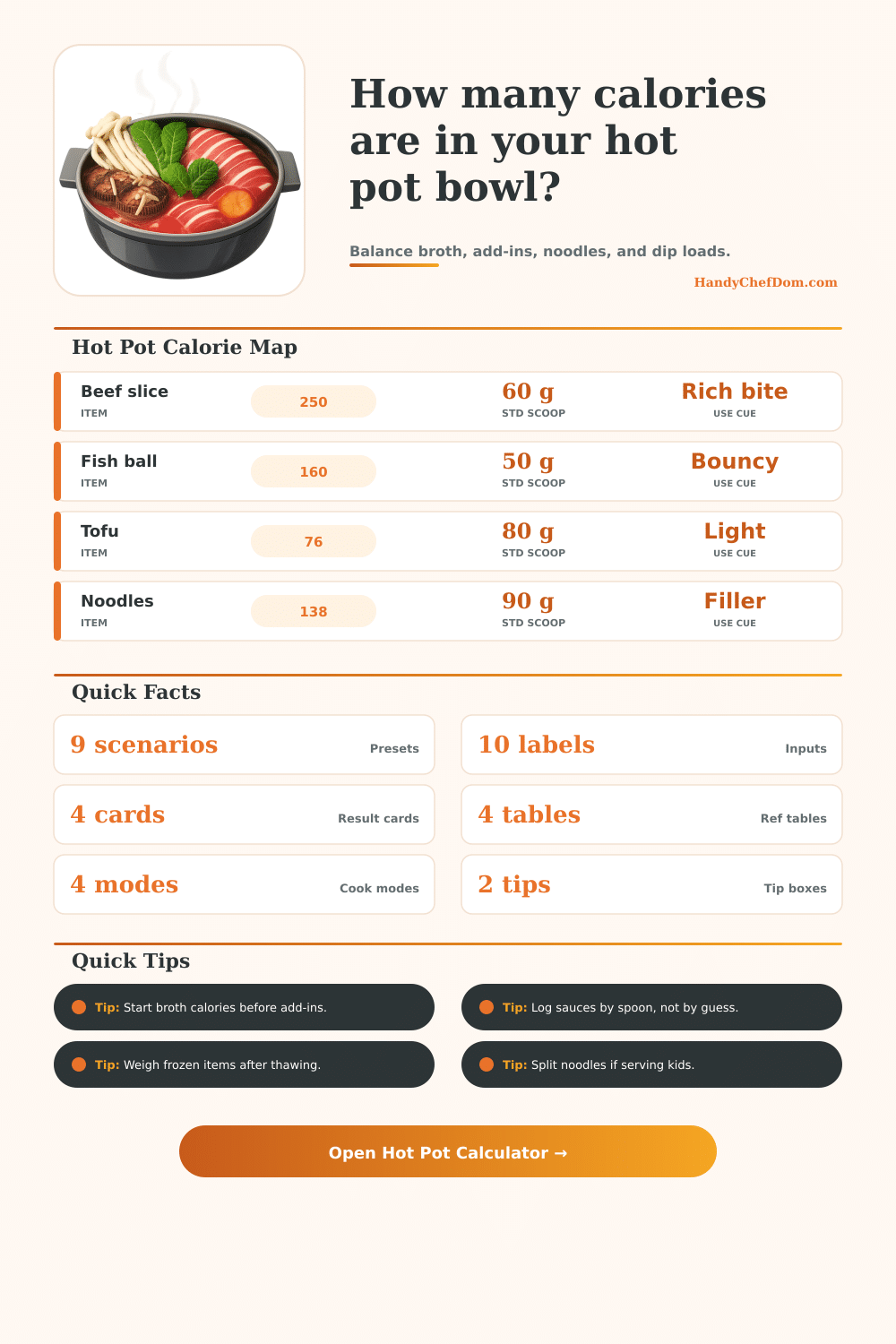
| Beef slice | 250 | 60 g | Rich bite |
| Lamb slice | 282 | 60 g | Fat edge |
| Shrimp | 99 | 70 g | Lean pick |
| Fish ball | 160 | 50 g | Bouncy |
| Tofu | 76 | 80 g | Light |
| Napa cabbage | 16 | 90 g | Crunch |
| Noodles | 138 | 90 g | Filler |
| Sauce | kcal/tbsp | Texture | When used |
|---|---|---|---|
| Sesame-garlic | 58 | Creamy | Beef heavy |
| Soy-vinegar | 14 | Thin dip | Seafood |
| Chili oil | 45 | Oily heat | Spicy pot |
| Peanut mix | 62 | Thick dip | Noodle bowls |
| Mode | Factor | Pace cue | Best for |
|---|---|---|---|
| Steady simmer | 1.00x | Even pulls | Weeknight |
| Protein focus | 1.08x | More slices | Gym crew |
| Noodle night | 1.12x | Late starch | Comfort meal |
| Dip heavy | 1.15x | Sauce-rich | Party table |
| Light pace | 0.88x | Small bowls | Lunch pot |
| Feast pace | 1.20x | Full refills | Celebration |
Hot pot meals consist of many differents ingredients that are cooked in an single pot of broth. It can be difficult for individual to understand the nutritional content of a hot pot meal due to the way that the nutritional content of the meal change as the ingredients is added to the broth. For instance, if fatty meat or noodles are added to the hot broth, the broth will contain more caloric than if those ingredients had not been added.
Furthermore, the type of broth that people use will also have an impact on the calorie content of the hot pot meal. For instance, a clear broth made with kombu will contain fewer calorie than a spicy mala broth, which often contains oils and fermented paste that contribute to its calorie content. Beyond the broth, the protein that are used in a hot pot meal will also impact the total number of calorie of the meal.
Why Hot Pot Calories Vary
For instance, meat like beef and lamb can have different level of fat content. A lean cut of shrimp will contain fewer calories than a fatty cut of wagyu beef. Although individuals often estimate portions of hot pot meal by sight, such estimations may introduce error into the calorie calculation of the meal.
Reference table for the calories of various proteins can help to ensure that the protein contribution to the hot pot meal is accurately calculated. In addition to the proteins that is used in hot pot meals, vegetables and tofu are also common ingredient of hot pot meals. Vegetables like napa cabbage and mushrooms will contribute to the volume of the meal without adding many calorie to the meal.
However, tofu is not always low in calories. Silken tofu has different caloric content than fried or marinated tofu, for instance. Finally, noodles is a common ingredient in hot pot meals.
However, the noodles will absorb the fats and oils of the broth, increasing the total number of calories that the eaters of the meal consumes. Another major factor that contribute to the total number of calories that are consumed from a hot pot meal is the dipping sauce that is used with the food. The lean protein and the clear broth contain fewer calories than the dipping sauce.
For instance, using a sauce like peanut sauce will increase the caloric content of each bite of food that is eat. Since each bite of food will be dipped in the sauce, the small amount of sauce that is used on each piece of food will contribute to a higher total amount of sauce that individuals eating the meal consume. A sauce calculator can help the individual understand how much sauce is use, so that the individual doesnt have to estimate the amount.
The way in which individual eat the meal can also impact the caloric content of the meal. For instance, not all individuals will eat the same amount of food as each other while eating a hot pot meal. Some individuals will consume more protein than other, for instance.
A calculation of the portion of hot pot that each guest will consume can help to calculate the calories that each individual will consume. Furthermore, providing time for any leftovers to be consumed will ensure that the calculated calorie for each guest will be accurate. Through understanding the relationship between the various component of a hot pot meal, such as the broth, proteins, vegetables, sauce, and the way in which the meal is consume, individuals can make informed decision about what type of meal they would like to consume and in what amount.
For instance, if an individual understands the relationship between the components of the hot pot meal, they may make a decision to consume more vegetable or to consume less sauce to limit the total amount of calorie that are consumed from the meal. It should of been noted that different than a standard dinner, hot pot requires alot of planning.