Ice Cream Butterfat Calculator
Plan dairy ratios with real fat and density data so you can hit target butterfat, compare style ranges, and predict churned yield before you freeze.
Preset Mixes
Topic Labels
Mix Inputs
Method: Liquid ingredients convert to mass using density. Butterfat comes from cream, milk, butter, and yolk. Final volume is estimated from overrun and process adjustment.
Butterfat Breakdown
Style Comparison Grid
Reference Tables
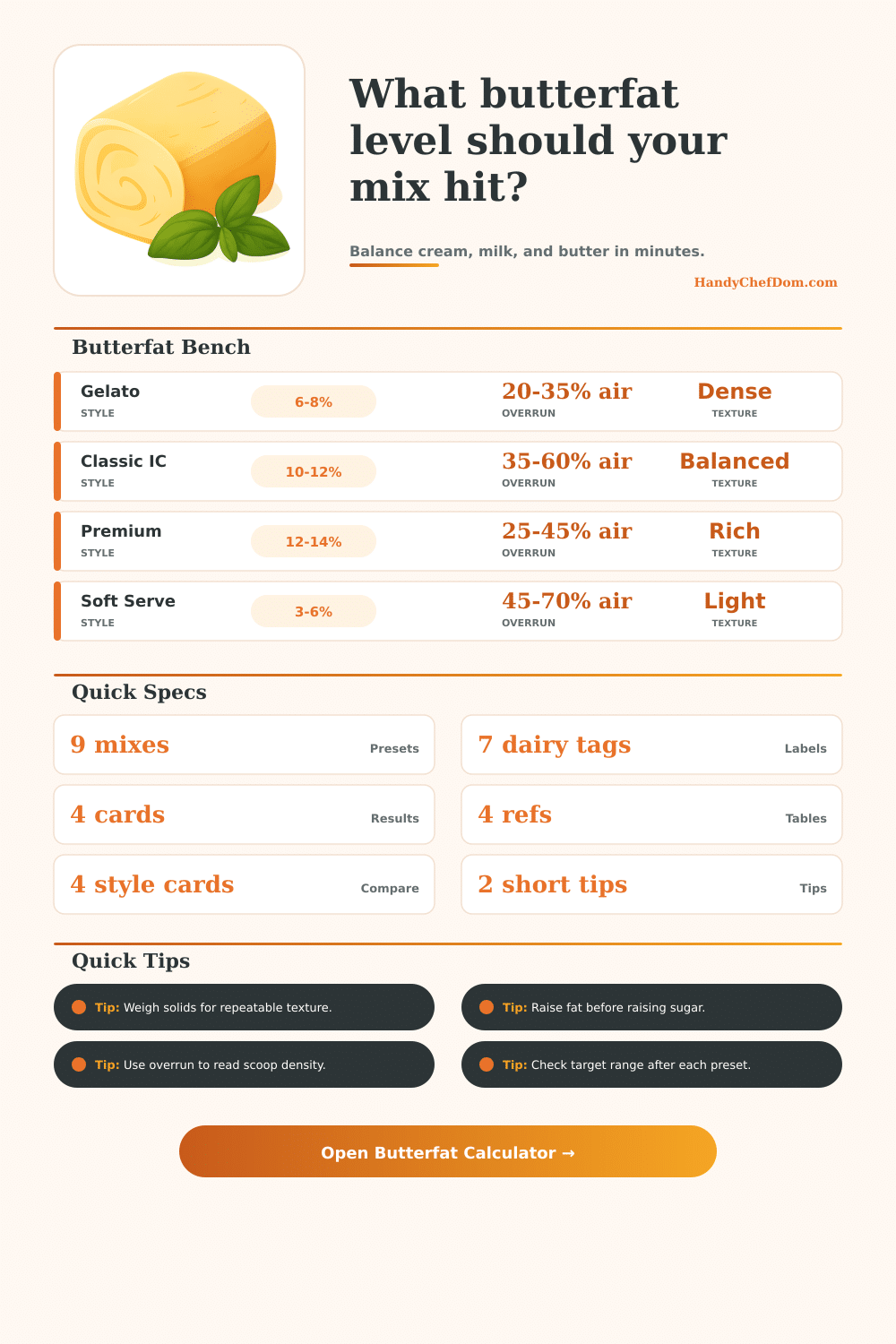
| Style | Butterfat % | Overrun % | Total solids % |
|---|---|---|---|
| Gelato | 6-8 | 20-35 | 36-40 |
| Classic ice cream | 10-12 | 35-60 | 36-42 |
| Premium ice cream | 12-14 | 25-45 | 38-43 |
| Frozen custard | 10-14 | 20-35 | 38-44 |
| Soft serve | 3-6 | 45-70 | 32-38 |
| Frozen yogurt style | 3-7 | 30-55 | 33-39 |
| Dairy ingredient | Fat % | Density g/ml | Notes |
|---|---|---|---|
| Heavy cream | 36 | 0.994 | Rich base driver |
| Whipping cream | 30 | 0.996 | Lighter than heavy |
| Light cream | 20 | 1.005 | Table cream range |
| Half and half | 12 | 1.015 | Blend dairy option |
| Whole milk | 3.25 | 1.030 | Standard milk phase |
| Skim milk | 0.1 | 1.036 | Low fat volume |
| Batch size | Gelato fat | Classic fat | Premium fat |
|---|---|---|---|
| 1 pint / 475 ml | 33 g | 52 g | 62 g |
| 1 quart / 946 ml | 66 g | 104 g | 123 g |
| 2 quarts / 1.9 L | 132 g | 208 g | 246 g |
| 4 quarts / 3.8 L | 264 g | 416 g | 492 g |
| 5 L tub | 350 g | 550 g | 675 g |
| Conversion | Metric | Imperial | Use |
|---|---|---|---|
| 1 fl oz | 29.57 ml | 1.00 fl oz | Liquid inputs |
| 1 oz | 28.35 g | 1.00 oz | Powders and sugar |
| 1 L mix | 1000 ml | 33.81 fl oz | Batch planning |
| 1 kg mix | 1000 g | 35.27 oz | Scale checks |
| 100 ml serving | 0.10 L | 3.38 fl oz | Label estimate |
Making ice cream require a specific amount of fat and solids to achieve a successful texture. If the fat content are too low, the ice cream will be thin. If the fat content is too high, the ice cream will be too heavier due to the fat content, which will mute the other flavor in the ice cream.
The primary variable for fat content is the butterfat in the ice cream because the butterfat will coat the ice crystals and slow the melting of the ice cream. To maintain the perfect texture, the butterfat percentage should be accurate to the percentage required for that particular style of ice cream. The ingredients will affect the final percentage of fat and solids in the ice cream.
Get the Right Fat and Solids for Ice Cream
Cream will provide the fat content needed for the ice cream. Milk will contribute to the volume and a small amount of fat. Butter can be added to increase the fat content without adding more water to the mix.
Skim milk powder and sugar will contribute to the solids in the ice cream but will not add fat to the ice cream mix. Egg yolk can be added to custard based ice creams to provide both fat and emulsifying properties to the ice cream. The overrun can impact the final volume of the ice cream.
Process adjustment allow for the variables of the room temperature and the way that the machine is packed to be accounted for in the recipe to ensure the ice cream comes out as measured and as needed. Different styles of ice cream can require different percentages of fat. Gelato will have a lower percentage of both overrun and fat content at around six to eight percent fat.
Classic ice cream will have a fat percentage of between ten and twelve percent. Premium ice cream will have a higher percentage of fat to ensure that it melts more slow. Soft serve ice cream will have a lower percentage of fat since it requires a high amount of overrun to create the volume of the soft serve ice cream.
By using the calculator, the user can pick the type of ice cream they would like to create, and the calculator will tell them whether or not their ingredients is meeting the requirements for that type of ice cream. The total solids within the ice cream mix are just as important as the fat content. The total solids will determine how much free water is remaining in the mix.
Too little total solids will result in large ice crystals in the ice cream. Too much total solids in the mix will make the ice cream feel gummy and may cause issues with the churning process. Both the percentage of fat and the total solids percentage needs to be monitored in the mixing of ice cream to achieve the best texture.
Scaling the recipe can change the math behind the ice cream. Small batches will create a different result than large batches due to the difference in heat and churning time of the ice cream. By using the batch size input on the calculator, the user can test the recipe at different volumes of ice cream so that the ice cream can be prepared in larger batches once the recipe is tested and proven with small batches of ice cream.
If the user increases the batch size, the ratio of the liquids to the powders will change, so the recipe will have to be recalculated to ensure the fat and solids percentage remain the same. Some of the common mistake when making ice cream include treating the ingredients as interchangeable. Using half and half for heavy cream will reduce the fat content of the ice cream.
Adding more sugar will lower the freezing point of the ice cream but will not add body to the ice cream. Using too much butter without adding the proper amount of liquid can lead to undissolved fat globules in the ice cream. All of these issue can be avoided by using the calculator to ensure that the percentage of fat content and the contribution of each ingredient to the fat content of the ice cream are within the parameters required for the best results.
Another benefit of using the ice cream calculator is that it will provide an estimation of the yield of the batch of ice cream. Using the overrun percentage of the batch, the calculator will determine how many pints or tubs of ice cream can be created. Using this percentage, it is possible to determine how many ice cream containers should be prepared.
Furthermore, the final volume of the batch of ice cream will help to determine whether or not the batch will fit in the ice cream machine. Small changes in overrun percentage can have an impact of as much as ten or fifteen percent change in the final volume of the batch. By being able to enter the recipe into the calculator and viewing the estimation of the batch size before churning the ice cream mixture, you can save money by avoiding waste.
Once you use the calculator to ensure your fat and solids content are within the necessary range for your type of ice cream, you can safely add flavors like chocolate or fruit puree. By using the calculator, the user can make the process of creating their own batches of ice cream a repeatable process by removing the guesswork of the ingredient ratio.