🍋 Lemons Per Gallon of Lemonade Calculator
Plan gallons of lemonade from real lemon yield, sweetness level, pulp style, serving size, ice melt, and concentrate strength.
Enter the final gallons you want to serve. For concentrate, the calculator keeps lemon and sugar strength sized to the final batch while showing how much smaller the base mix should be.
| Lemon type | Avg juice | Classic per gal | Batch note |
|---|---|---|---|
| Small lemons | 1.5 oz each | 8-10 lemons | Use a buffer for mixed grocery bags. |
| Medium lemons | 2 oz each | 6-8 lemons | The standard estimate for fresh lemonade. |
| Large lemons | 2.5 oz each | 5-6 lemons | Good for large cooler batches. |
| Jumbo lemons | 3 oz each | 4-5 lemons | Best when lemons feel heavy for size. |
| Meyer lemons | 2.25 oz each | 5-7 lemons | Sweeter and softer, often needs less sugar. |
| Mixed bag | 1.8 oz each | 7-9 lemons | Safer for events with uneven lemon sizes. |
| Sweetness level | Lemon juice per gal | Sugar per gal | Best batch use |
|---|---|---|---|
| Light backyard | 10 oz | 0.75 cup | Milder pitcher lemonade. |
| Classic balanced | 12 oz | 1 cup | General picnic or dinner service. |
| Sweet concession | 11 oz | 1.25 cups | Ice-heavy stand lemonade. |
| Extra tart | 16 oz | 1.1 cups | Bright batches for lemon lovers. |
| Mellow brunch | 9 oz | 0.8 cup | Softer flavor with Meyer lemons. |
| Bold festival | 15 oz | 1.35 cups | Large dispensers and outdoor events. |
| Final gallons | 8 oz servings | Classic lemons | Classic sugar |
|---|---|---|---|
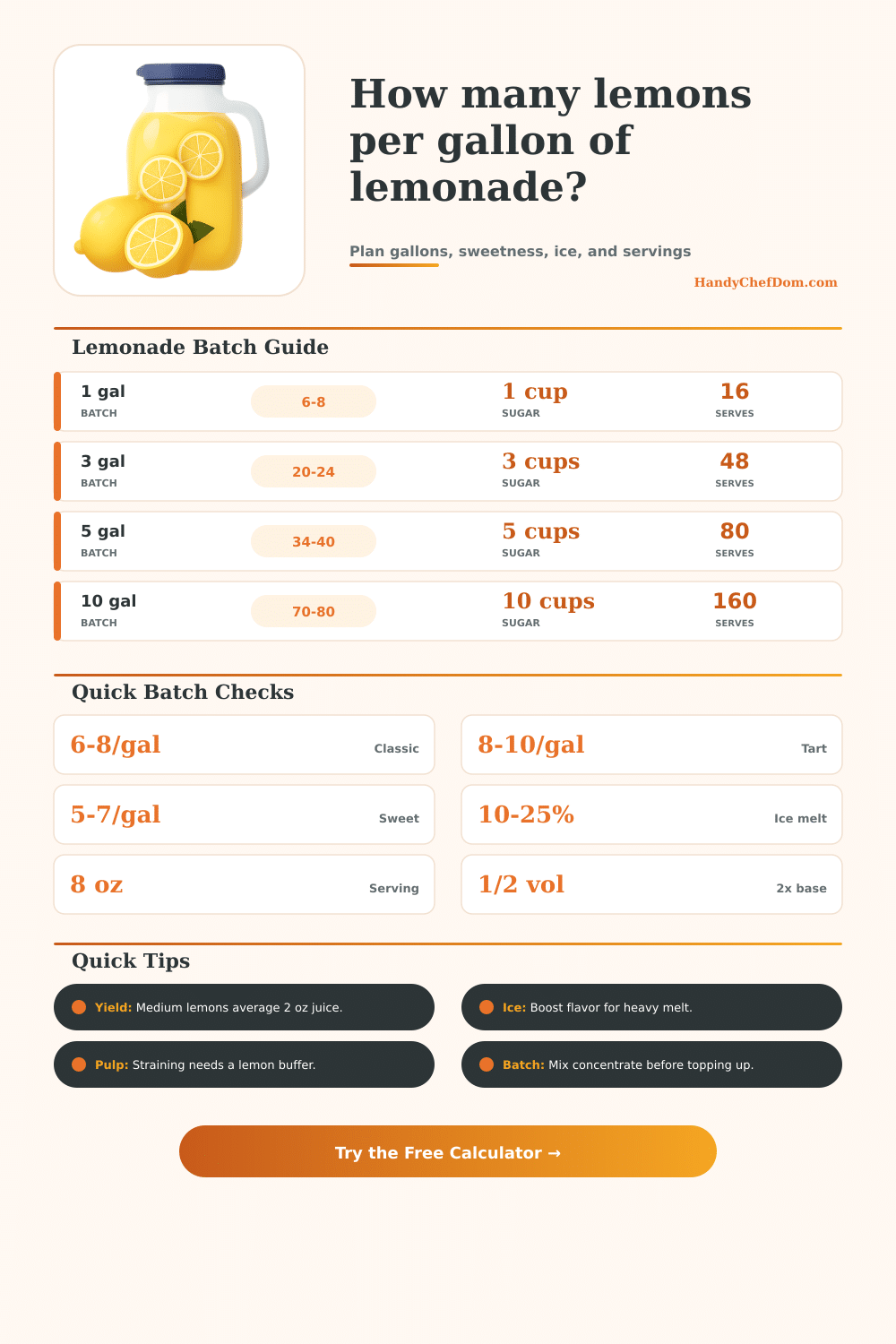
| 1 gallon | 16 servings | 6-8 lemons | 1 cup sugar |
| 2 gallons | 32 servings | 12-16 lemons | 2 cups sugar |
| 3 gallons | 48 servings | 20-24 lemons | 3 cups sugar |
| 5 gallons | 80 servings | 34-40 lemons | 5 cups sugar |
| 8 gallons | 128 servings | 54-64 lemons | 8 cups sugar |
| 10 gallons | 160 servings | 70-80 lemons | 10 cups sugar |
| Concentrate plan | Base volume | Top-up volume | Best use |
|---|---|---|---|
| 1x ready | Full batch | None | Serve from pitcher or dispenser. |
| 1.5x light base | Two-thirds batch | One-third batch | Useful when fridge space is tight. |
| 2x concentrate | Half batch | Half batch | Good for coolers and lemonade stands. |
| 3x freezer base | One-third batch | Two-thirds batch | Strong base for storage or transport. |
| Ice-heavy service | Base plus boost | Ice melt allowed | Outdoor events where cups sit longer. |
| Sparkling top-up | Chilled base | Add bubbles last | Keeps carbonation from going flat. |
Calculations use common kitchen averages: one gallon equals 128 fl oz, one cup equals 8 fl oz, and a medium lemon yields about 2 fl oz of juice.
There’s no telling until you get there, though. Every bag of lemons won’t yield the same amount of juice, some will be much better then others, resulting in the guesswork required to determine how many you should of buy. Six lemons per gallon sounds great on paper, but it never actualy works out that way.
There’s always something to consider: the sweetness you prefer, the ice water dilution, the type of lemon itself. Before you serve, all that math has to adds up in your head. Unless you use calculator, which does all that math for you based off your settings. You won’t have to stand over a hot pitcher and second-guess conversions anymore.
How to Make Perfect Lemonade Every Time
First off: What’s your lemon yield? Two ounces of juice per medium lemon is an oft-quoted standard, but there’s no such thing as an “average” lemon (and smaller lemons at the grocery store takes more to reach same volume). And if you have jumbos or Meyers, their larger size knock down the number. For all these reasons, the tool asks you to specify this difference, since it affects overall number of people completeley. You don’t need to be caught with a lack of citrus mid-party. Get the yield right and you’ll end up buying just the right amount of fruit; not too much, not too little.
There’s also sweetness. And by sweetness I mean a lever that moves the numbers around. A classic balance lemonade generaly involve about one cup of sugar per gallon. Why? Because this delivers a familiar taste that most people expect. Want some tart? Then you’ll use less sugar, which means using fewer lemons, and more juice, which means using more lemons. Making concession stand lemonade for kids? Sweeten it up! Fewer lemons (slightly), more sugar. These choices is important, they determine not only the final volume, but your grocery list.
Don’t forget about ice melt. As the ice in your pitcher thaws, it will add more water. And that water will dilute the mix of flavors you so carefuly tweaked into balance. If you account for this by making the base mix stronger (ten or fifteen percent more) before adding ice, then it won’t matter so much. Small thing, but it makes a big difference. Making plans around ice, or ignoring it, is often the line between a bright drink and a flat one.
When it comes to transportation and storage, the plan concentrates offer a simple answer. By combining a concentrated amount of sugar and lemon juice, you can keep a small volume in your fridge (or freezer) and top off with water just before pouring. The calculator also tells you precisely how much base mix you should make vs. How much water to add on the go. This works well if you’re hosting a bigger event. It is inconvenient to carry around entire gallons of finished lemonade. With a 2x concentrate, you’ll only prep out half that volume in advance.
Another factor is your pulp preference. Removing pulp will save some juice, but some is wasted as well. To compensate for that, you’ll need some buffer space, because you don’t want clear lemonade. With extra pulpy lemonade, there’s no such waste: More of the fruit is used (which can be a saving if you’re using a citrus juicer and squeezing whole lemons). So the tool compensates for this style preference, ensuring you aren’t left short on volume when it matters most.
And lastly, think about the serving size. Most standard glasses are eight ounces while big event cups could be as high as twelve or more. This input will change your total number of servings and let you figure out whether you’ve got enough for all guest. Better to have too much than not enough! To quickly check what you’re going to pick, the reference table below shows common batch sizes.
Controlling variables: that’s what making good lemonade is all about. When you define the inputs, the recipe becomes less of a guessing game. You know precisely how much sugar to pack in and how many lemons to buy for your event. The outcome? You get consistent, delicious flavor every single time. And that makes this a trick that builds confidence, which converts a plain old jug of juice into something more reliabel as a party-host tool.