🍗 Chicken Breasts per Pound Calculator
Estimate breast count by package weight, raw or cooked planning mode, boneless skinless yield, trimming loss, portions, servings, meal style, and cooked output.
Use package mode when you have a tray of chicken. Use serving mode when you want to know how much raw chicken to buy for a target number of cooked portions.
| Breast Size | Typical Raw Weight | Per Pound | Cooked Yield Each | Best Fit |
|---|---|---|---|---|
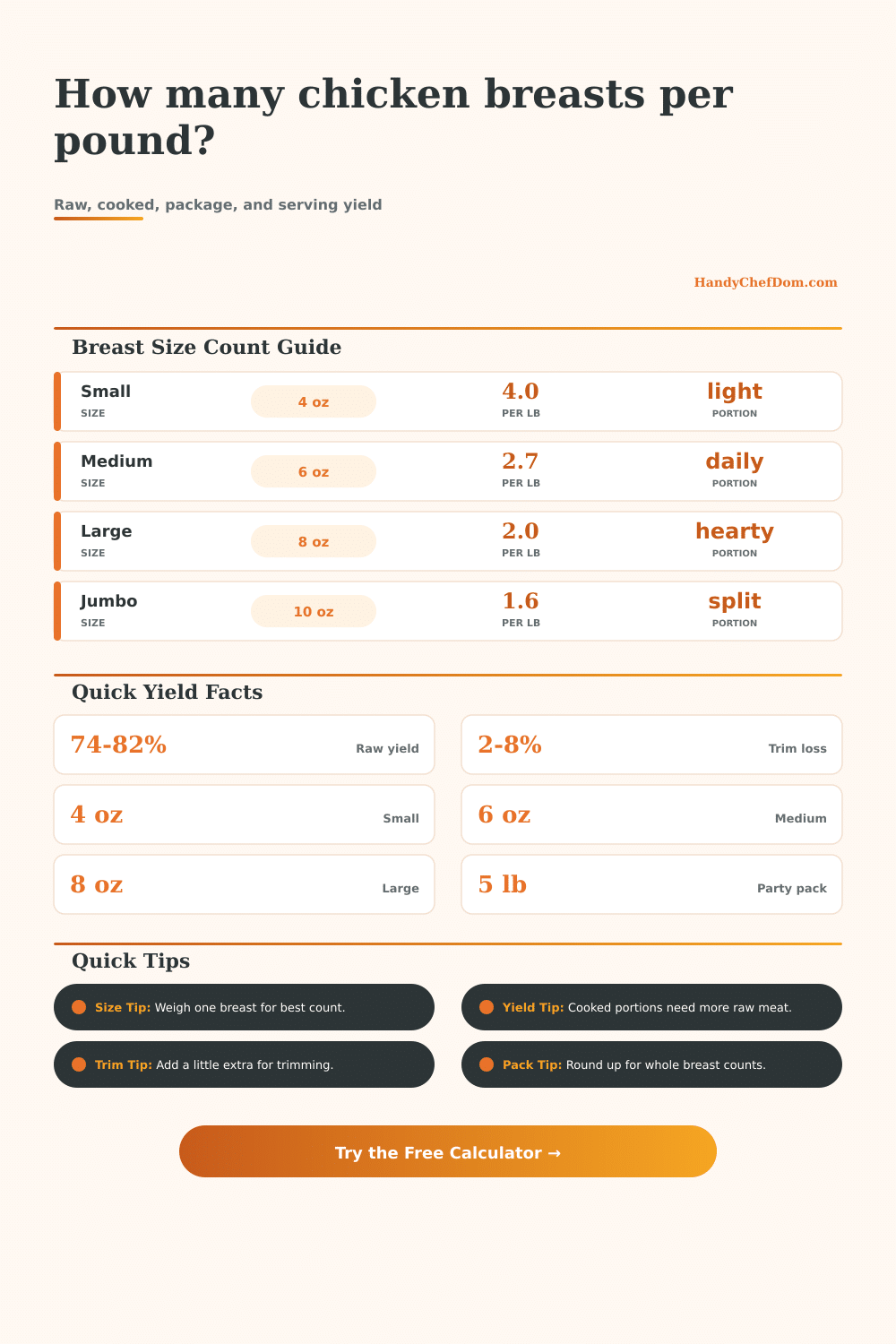
| Thin cutlet | 3 oz | 5.3 pieces | 2.2-2.4 oz | Sandwiches and quick plates |
| Small breast | 4 oz | 4.0 pieces | 3.0-3.2 oz | Light meals and kids portions |
| Medium breast | 6 oz | 2.7 pieces | 4.5-4.8 oz | Everyday dinner portions |
| Large breast | 8 oz | 2.0 pieces | 5.9-6.4 oz | Hearty plates or split portions |
| Extra large breast | 10 oz | 1.6 pieces | 7.4-8.0 oz | Large entrees and meal prep |
| Jumbo breast | 12 oz | 1.3 pieces | 8.9-9.6 oz | Slice or divide after cooking |
| Package Weight | Small Breasts | Medium Breasts | Large Breasts | Cooked Yield |
|---|---|---|---|---|
| 1 lb raw | about 4 | about 3 | about 2 | 12-13 oz cooked |
| 1.5 lb raw | about 6 | about 4 | about 3 | 18-19 oz cooked |
| 2 lb raw | about 8 | about 5 | about 4 | 24-26 oz cooked |
| 2.5 lb raw | about 10 | about 7 | about 5 | 30-32 oz cooked |
| 5 lb raw | about 20 | about 13 | about 10 | 60-64 oz cooked |
| 10 lb raw | about 40 | about 27 | about 20 | 120-128 oz cooked |
| Chicken Form | Trim Loss | Cooked Yield | Raw Needed For 5 oz Cooked | Planning Note |
|---|---|---|---|---|
| Boneless skinless breast | 2-6% | 74-78% | 6.8-7.2 oz | Best default for packages |
| Thin sliced breast | 1-4% | 76-80% | 6.4-6.7 oz | Even pieces, quick yield |
| Tenderloins | 3-7% | 75-79% | 6.6-7.1 oz | More pieces per pound |
| Bone-in skin-on breast | 18-28% | 58-66% | 8.5-9.8 oz | Bone and skin lower edible yield |
| Mixed trimmed pieces | 5-10% | 72-77% | 7.0-7.6 oz | Useful for chopped meal prep |
| Diced breast meat | 2-5% | 78-82% | 6.3-6.6 oz | Small pieces lose less count detail |
| Meal Style | Cooked Portion | Raw Needed | 1 lb Raw Serves | Best Use |
|---|---|---|---|---|
| Kids portions | 2.5-3 oz | 3.5-4.2 oz | 4-5 servings | Smaller plates |
| Light salads or bowls | 3.5-4 oz | 4.8-5.6 oz | 3 servings | Lunches and bowls |
| Sandwiches and wraps | 4-5 oz | 5.5-6.9 oz | 2-3 servings | Sliced or chopped chicken |
| Standard dinner plate | 5-6 oz | 6.8-8.3 oz | 2 servings | Weeknight meals |
| Meal prep containers | 5-6 oz | 6.8-8.3 oz | 2 servings | Repeatable lunches |
| Hearty entree | 7-8 oz | 9.6-11.1 oz | 1-2 servings | Large dinner plates |
| High protein portions | 8-10 oz | 11.0-13.8 oz | 1 serving | Protein-focused meals |
There you stand in the grocery aisle with a package of chicken breast in your hand. Two pounds, it says on the label. But what does that realy mean? How many pieces of chicken is there?
That’s a frequent issue among both first-time meal preppers and cooks. The above calculator run through the numbers for you. It converts unclear package weight into a real number of servings.
Why You Need This Chicken Calculator
To make the most of this tool, however, you should of know why those numbers change. Not all chicken breasts is created equal They’re living things with varying sizes. Four small breasts could weigh exact same as two big ones.
You can change that in the tool. It has preset buttons so you can pick how large or small chickens are. That’s important because depending on how many breasts there are you’ll plan your portions different. Are you going to roast whole halves? Or do they need to be sliced thinner for sandwiches? Too much or too little will result in disaster.
Raw chicken contains a lot of both fat and water. Both render out or evaporate in cooking. When most folks purchase their two pounds, they expects to end up with two pounds of cooked dinner.
Surprise! A percentage field called “yield” on the calculator allow for setting how much you lose as a result off the cooking process. Setting it at 75% or thereabouts accounts for the fact that yes, we do. We loses some weight trimming fat and silverskin. But we also lose some weight when heat touches down.
That’s the key, the loss. That can be the difference between having a full plate vs. You feel like you were cheated. Sadly, many folks don’t understand that, so they work off the package weight rather than what end up on the plate.
Think about what type of meal you’re targeting. Three ounces of cooked chicken might be all that’s needed for a light salad bowl. Six or more ounces may be necessary to fill out a hearty dinner plate for a hungry teenager. This tool reduces the raw purchase quantity to match your target. Since it starts backwards from the cooked portion, it ensure adequate protein for everyone while also preventing an excess purchase.
When you’re catering a potluck for twenty-five people, the buffer percentage come into play. You don’t want too much leftover, but you do want some additional meat. By adding a flexible safety margin, the calculator can help determine just how much is appropriate.
Hidden variables includes trimming. Some arrive perfectly trimmed. Others have a layer or two of fat that must be removed. Even if you don’t trim much, there’s still a loss assumed in yield calculation.
Edible yield goes way down if your chicken is skin on and bone-in. Your dinner won’t include any bone weight. You can switch between bone-in and boneless modes in the tool.
This change everything. A pound of bone-in breast is largely skin and bone. What it delivers to the plate is pretty meager. You’ll need to purchase far more raw weight for the equivalent cooked serving.
There’s one other consideration: storage. Frozen chicken will lose some moisture compared to fresh chicken when it thaw. That means the total yield will be a bit less. Are you using frozen stock? A good strategy would be to increase the buffer percentage in the calculator. It’ll account for the additional shrinkage without costing you significantly more cash.
You’re looking for a number that isn’t wasteful, but that makes you feel safe. Decide how much chicken to buy. When it comes to cooking chicken, it’s all about setting expectations.
If your expectation is that you’re going to make a soup or curry using a pound of boneless, skinless chicken, then buying bone-in chicken and de-boning it yourself would require you to buy significantly more raw weight to get the same amount of meat. But when you factor in size, trim loss, and cooking shrinkage, you shift from guesswork to knowing.
This works depending on the cut and whether it is bone-in or boneless. There are many factors, such as cooking shrinkage, trim loss and the size of the chicken raised by the farmer, but the math isn’t impossible if you factor those things into the equation.
For example, check out the table above, which shows the math between what size package to buy, and how many servings per person. Then use the calculator to create your shopping list.
Once at the stove, trust the process. You’ll have enough food, which is a useful result.