🦐 Shrimp Protein Calculator
Estimate shrimp protein by size count, raw or cooked weight, peeled yield, servings, calories, fat, and sodium.
Enter the package weight, choose whether it is raw or cooked, then adjust shell yield and servings to estimate edible protein, calories, fat, and sodium.
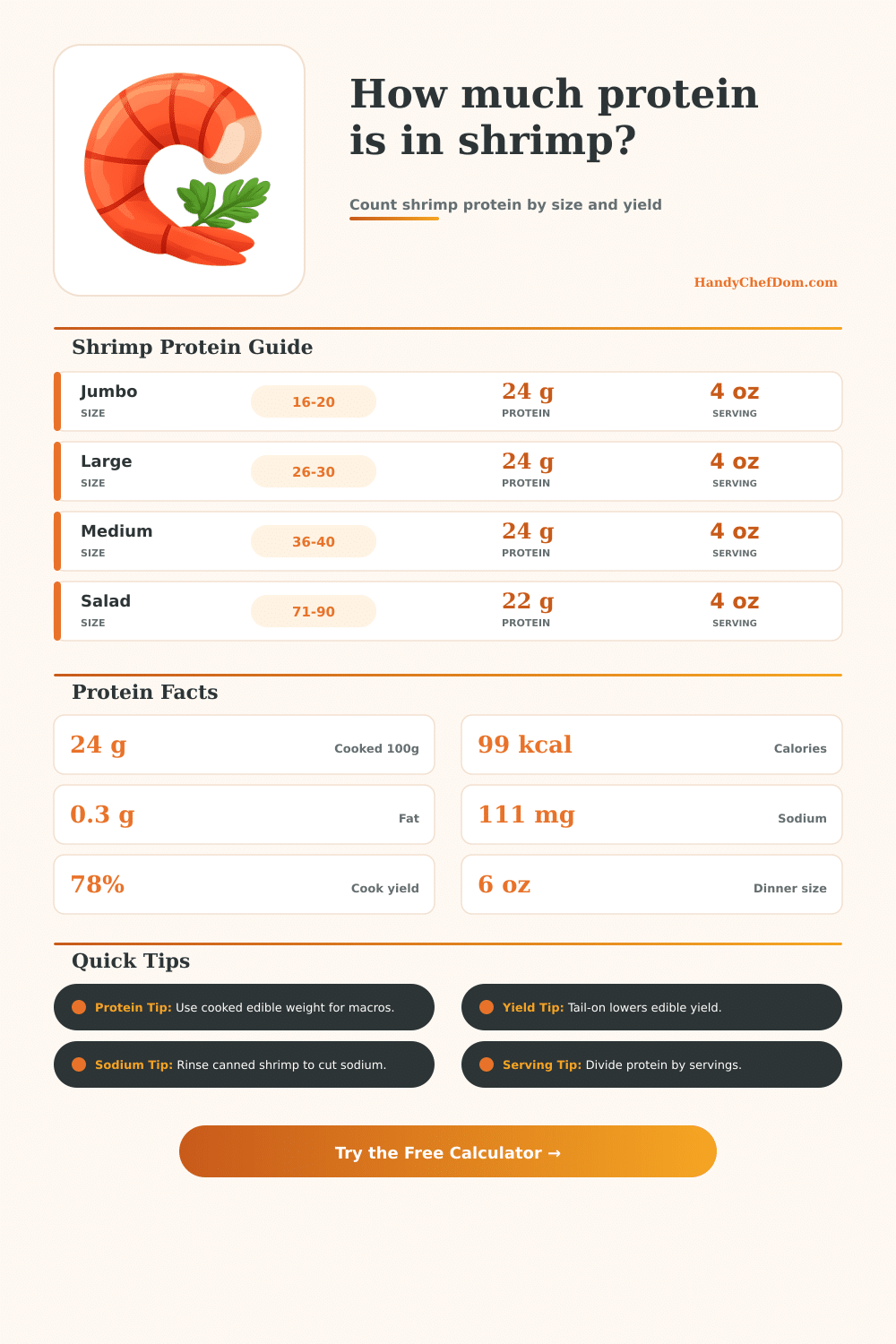
| Shrimp size | Count per lb | Approx pieces in 4 oz raw | Protein in 4 oz cooked |
|---|---|---|---|
| Colossal | 8-12 | 2-3 shrimp | 27 g |
| Jumbo | 16-20 | 4-5 shrimp | 27 g |
| Large | 26-30 | 7-8 shrimp | 27 g |
| Medium | 36-40 | 9-10 shrimp | 27 g |
| Small | 51-60 | 13-15 shrimp | 26 g |
| Salad | 71-90 | 18-23 shrimp | 25 g |
| Starting shrimp | Edible yield | Cooked yield | Protein note |
|---|---|---|---|
| Peeled raw shrimp | 100% | 78% | Best for macro planning |
| Peeled tail-on | 94% | 73% | Tail weight is excluded |
| Shell-on raw | 62% | 48% | Shell lowers edible protein |
| Head-on shell-on | 48% | 37% | Use for whole shrimp trays |
| Cooked peeled | 100% | 100% | Use label drained weight |
| Cooked tail-on | 94% | 94% | Tail is not edible weight |
| Nutrition profile | Protein per 100 g | Calories | Fat and sodium |
|---|---|---|---|
| Plain cooked shrimp | 24.0 g | 99 kcal | 0.3 g fat, 111 mg sodium |
| Raw peeled shrimp | 20.1 g | 85 kcal | 0.5 g fat, 119 mg sodium |
| Frozen cooked shrimp | 23.5 g | 100 kcal | 0.4 g fat, 180 mg sodium |
| Grilled plain shrimp | 24.8 g | 105 kcal | 0.6 g fat, 130 mg sodium |
| Seasoned shrimp | 23.0 g | 115 kcal | 1.2 g fat, 420 mg sodium |
| Canned drained shrimp | 20.4 g | 100 kcal | 1.0 g fat, 600 mg sodium |
| Meal plan | Cooked shrimp per person | Protein per person | Total for group |
|---|---|---|---|
| Salad topping | 3 oz | 20 g | 12 oz for 4 |
| Standard dinner | 5 oz | 34 g | 20 oz for 4 |
| Protein bowl | 6 oz | 41 g | 36 oz for 6 |
| Taco filling | 4 oz | 27 g | 48 oz for 12 |
| Appetizer tray | 2 oz | 14 g | 50 oz for 25 |
| Meal prep box | 5.5 oz | 37 g | 27.5 oz for 5 |
But there’s one thing about purchasing shrimps: you almost never get to pay for the shrimps you wind up eating. What starts out as a two-pound bag (including the glaze of icewater, the weight of the shells, and potentially even the head if you purchased a whole animal) becomes something else entirely when stripped down to just the edible portion. Unless you’re cooking by eyeball, most folks don’t want to bother with calculating how much they’ll lose in yield. After all, who wants to underfeed a room full of people or overestimate their own consumption?
Once you enter your package size and whether shells are on or off, the calculator will take care of math. You will no longer have to guess or eyeball portions; you will get precise data on calories, sodium, and protein. Now that is planning with confidence.
How to Count Shrimp Weight Correctly
One thing to keep in mind: Raw weight vs. Cooked yield. When shrimp cooks, some of its moisture cook away. So if you put raw weight into the calculator, it calculates how much that same mass of meat will weigh once cooked. Why? Because grocery stores will sell you shrimp based off raw weight. Nutrition labels will show cooked values. And if you mix those two, you get confused.
So this tool asks if you’re entering cooked or raw. So if you’re starting with pre-cooked, frozen shrimp, then you’ll have almost full yield since it’s already lost the water. But if you’re starting with fresh, shell-on shrimp, then there will be a bigger dip in yield. That’s where most folks get tripped up trying to reach their protein macro.
Everything else depends on shell type. If you’re buying tail-on shrimp, it’ll appear to be a bit heavier in the bag than peeled and tail-off variety, but that tail doesn’t contain any meat; it’s all waste. Even worse: when purchasing raw shrimp with the shells on, almost half of weight could be shell rather than the actualy meat of the shrimp! To adjust for that, the tool allows you to choose an estimated yield percentage depending on what you’ve purchased. You can even take into account whether your shrimp have heads on or not which reduces the amount of edible meat even more. So while two bags of shrimp may appear identical in size, they will yield vastly different quantities of food when prepped.
But it is not about how much protein there is. Whether you have salad shrimp (tiny) or colossal size, four ounces of cooked shrimp will yield about twenty-four grams of protein. The bigger ones takes up more room on your plate and feel heavier. This is because they has fewer surfaces exposed while cooking. Be careful not to overcook the big ones since that part dries them out fastest.
The page has a reference table that lays it all out, illustrating how many pieces goes into a standard serving. This is useful when, say, you want to portion something for a party in which people are expecting a specific number of pieces on their cocktail pick or spear instead of having some weighed mound of meat put in front of them.
The other two elements of any diet plan are sodium and fat. Shrimp itself is a very low-fat food with few calories (unless you go for plain). But if you choose something like canned or seasoned shrimp, you might end up getting a much higher level of sodium per serving. You can account for added sauces or brines on this tool which lets you get an accurate read on sodium. Rinsing canned shrimp first will reduce the sodium hit greatly. This little change doesn’t do anything for the amount of protein you’re eating, but it makes the nutrition better.
In the end, knowing exactly what you’re eating allows you to plan accurately. It shows you the protein per serving. It lets you know if you’ll meet your daily goals or not. It bridges the gap between that confusing label on the bag and the reality of what ends up on your dinner plate. It takes away the guesswork of healthy eating by taking into account any seasoning adjustments, shell removal, and shrinkage.