🍞 Sourdough Timeline Calculator
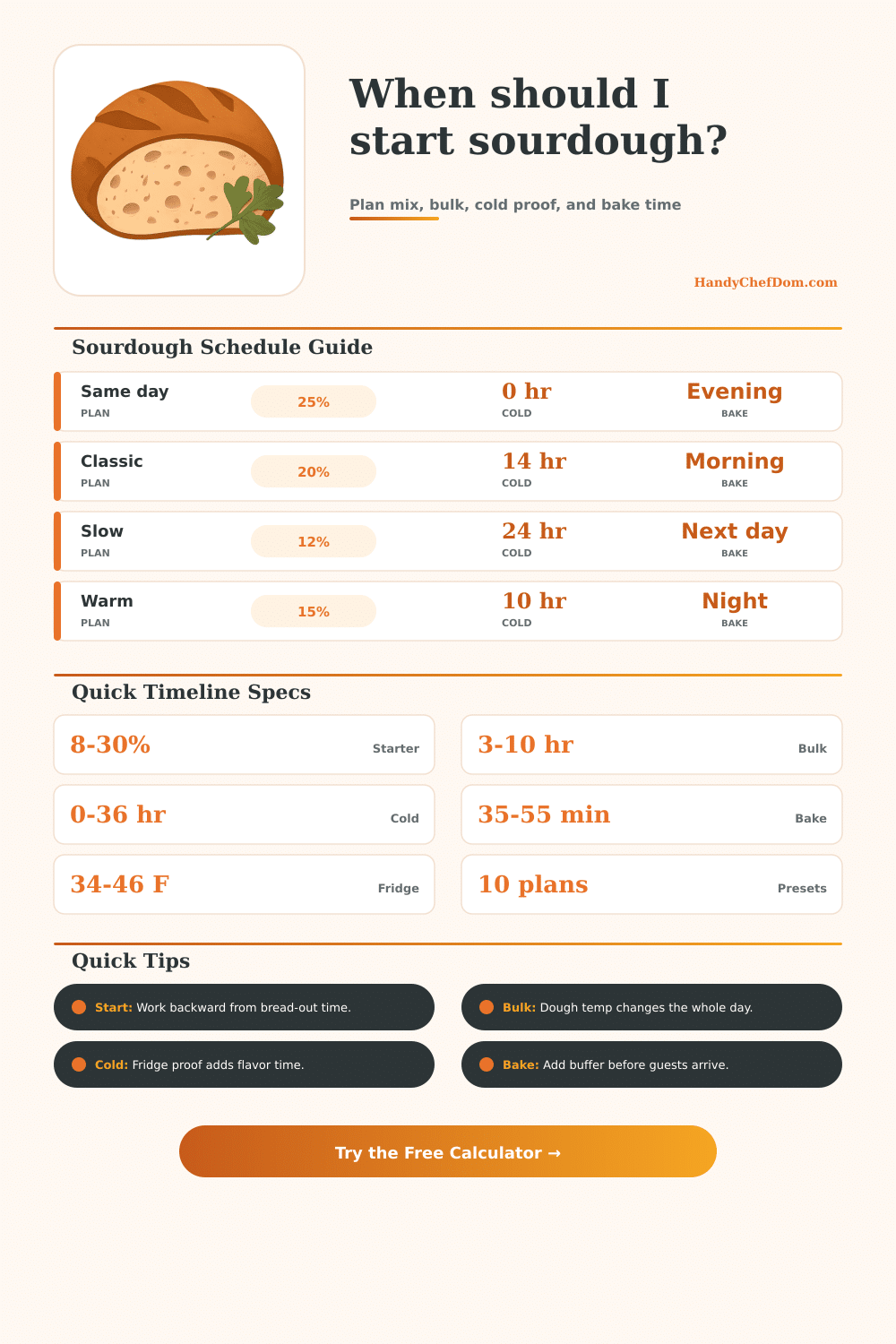
Plan sourdough backward from the time you want bread finished. Estimate mix, autolyse, bulk fermentation, preshape, shaping, cold proof, bake start, and bread-out time from dough temperature, starter percentage, fridge temperature, and loaf size.
Choose the bread-out time, then adjust the dough conditions. The calculator builds a backward schedule and shows phase times you can copy to a kitchen note.
Estimated room phase before preshape and final shaping.
Basket time in the fridge before baking from cold.
Relative activity after dough temp, starter, flour, and hydration.
Cooling or arrival cushion after the loaf leaves the oven.
Hydrates flour and organizes the rest of the timeline before salt and folds.
The most variable phase because dough temperature and starter strength drive speed.
Creates an intermediate round, then lets the gluten relax before final shaping.
Builds surface tension and starts the basket proof clock.
Adds flavor and scheduling flexibility while the loaf chills and firms.
Useful when skipping the fridge, but it gives less timing protection.
Depends on loaf size, covered steam time, oven setup, and crust target.
Protects the crumb and keeps the schedule calm before slicing or serving.
| Phase | Count backward from | Typical length | Main input | Planning cue |
|---|---|---|---|---|
| Serving buffer | Bread-out time | 0 to 2 hours | Serving buffer | Use more buffer before guests or dinner service |
| Bake phase | Bread-out time | 35 to 55 minutes | Loaf size and bake minutes | Load the loaf at the calculated bake start |
| Cold proof | Bake start | 8 to 24 hours | Fridge temp and cold hours | Bake straight from cold if the loaf is proofed |
| Shape and bench | Fridge start | 25 to 60 minutes | Preshape and shape minutes | Give slack dough more bench rest only if it holds shape |
| Bulk fermentation | Preshape time | 3 to 10 hours | Dough temp and starter percent | Confirm with rise, bubbles, and jiggle |
| Mix and autolyse | Bulk start | 20 to 90 minutes | Autolyse minutes | Start here if you want the rest of the plan to land |
| Dough temp | Starter percent | Bulk pace | Good schedule | Watch point |
|---|---|---|---|---|
| 66 to 69 F / 19 to 21 C | 20 to 30% | Slow | Cool kitchen or overnight room bulk | Use volume marks and give enough time |
| 70 to 73 F / 21 to 23 C | 18 to 22% | Balanced | Standard daytime mix and overnight fridge | Check near the calculated midpoint |
| 74 to 77 F / 23 to 25 C | 15 to 20% | Active | Reliable weekend or worknight plan | Shorten bulk if dough gets very gassy |
| 78 to 82 F / 26 to 28 C | 10 to 18% | Fast | Warm kitchen, same-day bread, or shorter cold proof | Check early and lower the rise target |
| 83 F+ / 28 C+ | 8 to 15% | Very fast | Only for controlled quick schedules | Overproofing can arrive before the timer |
| Fridge range | Cold proof pace | Best duration | Timeline use | Risk note |
|---|---|---|---|---|
| 32 to 35 F / 0 to 2 C | Very slow | 16 to 36 hours | Long flavor window with low proofing speed | Loaf may need more room proof if underdone |
| 36 to 39 F / 2 to 4 C | Slow and steady | 10 to 24 hours | Most reliable overnight refrigerator range | Good for baking direct from cold |
| 40 to 43 F / 4 to 6 C | Moderate | 8 to 18 hours | Useful when the fridge runs a little warm | Reduce bulk rise for long proofing |
| 44 to 46 F / 7 to 8 C | Active | 6 to 12 hours | Short cold proof or flavor rest only | High risk after a full bulk |
| 47 F+ / 8 C+ | Fast | Short only | Treat as a cool room, not a true retard | Use a colder fridge or shorter schedule |
| Dough weight each | Common bake phase | Cold proof note | Cooling buffer | Planning cue |
|---|---|---|---|---|
| 500 to 650 g | 28 to 38 minutes | Chills quickly | 30 to 45 minutes | Good for mini boules and faster bakes |
| 750 to 950 g | 38 to 50 minutes | Standard home loaf | 45 to 75 minutes | Use as the default planning size |
| 1000 to 1250 g | 45 to 60 minutes | Cools slower in the fridge | 60 to 90 minutes | Begin bake checks later than small loaves |
| 1300 g plus | 55 to 75 minutes | Needs a strong dough and cool fridge | 90 to 150 minutes | Add schedule buffer and verify internal set |
This calculator gives a planning timeline for sourdough. Flour strength, starter maturity, container shape, fridge cycling, and oven setup can shift real timing, so confirm with dough cues.
Sourdough baking require planning a schedule due to the various factor that influence the sourdough starter. There are several steps involve in baking sourdough bread, and if you dont coordinate these steps properly, the sourdough starter will overproof the dough, leading to the failure of the baking schedule. One of the major factor that affects the sourdough baking schedule is the effect of temperature on the sourdough starter.
The temperature of the room where the sourdough starter is allowed to sit affects the sourdough starter’s reaction to the air in the room. A change in room temperature alter the bulk fermentation time by one hour or more. The calculator allow you to enter the temperature of your dough and the temperature of the room where the sourdough baking will happen.
Plan Your Sourdough Baking Schedule
The sourdough starter percentage will also affect the baking time of sourdough bread. A high percentage of sourdough starter add more yeast and bacteria that will speed up the sourdough fermentation process. If you use a lower percentage of sourdough starter, the sourdough starter will take longer to ferment the dough.
Using a low percentage of sourdough starter is helpful if you want to undertake a long cold proof for your sourdough starter if your kitchen is warm to the touch. The higher the percentage of sourdough starter, the more stronger the flavor of the sourdough bread because the acid will have more time to develop in the sourdough starter. However, the calculator does not determine the sourdough starter percentage for the bread.
It only calculates the effect that the sourdough starter percentage will have on the baking schedule if you choose a target time for your bread to come out of the oven. Another factor that will impact the sourdough baking schedule is the length of the cold proof. If you place your sourdough bread loaf in the refrigerator, this will slow the sourdough starter fermentation process.
The longer you undertake a cold proof process, the more the gluten in sourdough bread will relax. This is also ideal for sourdough starter flavor to develop. The length of the cold proof will depend on the temperature of the sourdough starter bulk fermentation and the temperature in your refrigerator.
You will have to input the refrigerator temperature in the baking schedule calculator. If you undertake a long cold proof process, the baking schedule calculator will warn you if the setting for bulk fermentation and the refrigerator temperature will result in overproofing of sourdough starter dough. The size of the sourdough bread loaves you bake will also impact the time to bake the loaves and the time that the sourdough bread takes to cool down.
The larger the weight of the sourdough dough, the longer it will take for the dough to cool after baking is complete. This can cause the sourdough bread to be ready to eat later than you would expect based on teh oven timer. The baking schedule will adjust the baking time if you enter a higher weight for the sourdough dough that you will bake.
Tables have also been included on the page to allow you to compare the different options available without having to use the baking schedule calculator. These tables include the effect of dough temperature and sourdough starter percentage on the bulk fermentation process. Another table illustrate how the different temperatures in the refrigerator will impact the cold proof process.
A third table shows the weight of sourdough bread loaves and how this will impact the baking and cooling time of the sourdough starter bread. These tables will allow you to decide if you will need to adjust the sourdough starter’s bulk fermentation time if the temperature of your kitchen is higher than ideal. You should not rely on the baking schedule calculator alone.
You will have to physically observe the sourdough starter to determine when the dough is ready for the next step. Baking schedule indicators will show you when the sourdough starter is properly ferment. These indicators include the formation of side bubbles on the sourdough starter, the formation of a rounded edge on the sourdough starter container, and the jiggle motion of the container when it is shake.
After the cold proof, you can also physically observe the sourdough starter to determine if it is ready for baking. The indicators will include the slow-poke response of the sourdough starter and whether the sourdough loaf will maintain its shape when lightly pressed. If the sourdough starter displays these indicators, the sourdough starter is ready to be baked, even if the schedule calculator suggest otherwise.
Many mistake will occur if you treat one variable as a number while ignoring how the other variables will change. For instance, if you maintain a 20 percent sourdough starter while the kitchen temperature changes, you are likely to cause the failure of the baking schedule. Another mistake will occur if you set a long time for the sourdough starter to undergo a cold proof.
You will have to adjust the bulk fermentation time of the sourdough starter to accommodate the cold proof time. This mistake will cause the sourdough bread loaves to spread once they are in the oven. The baking schedule calculator will allow you to avoid these mistakes since it makes these interaction visible to the baker so that you can make adjustments to one variable and see how the others will change.
Another factor that will impact both the sourdough baking schedule and the flavor of the sourdough bread is the type of flour you use. Flour that contains whole grain will ferment faster than bread flour due to the higher amount of minerals and enzymes in the whole grains. Rye and spelt flour will also speed up the sourdough starter fermentation process, but the dough created using these flours will be stickier due to the enzymes in the grains.
These flours will set a shorter time for sourdough starter bulk fermentation. You will also enter the type of flour into the baking schedule calculator. The hydration of the sourdough starter and the number of time you fold the dough will also impact the baking schedule.
Dough with higher hydration will ferment faster than dough that has been folded more times. The folding of sourdough starter dough redistributes the gas in the sourdough starter. This will result in a sourdough starter that takes less time to ferment.
However, this will have the additional benefit of slowing the sourdough starter’s rising time. The hydration and fold count will also be entered into the schedule calculator. The purpose of creating the sourdough starter baking schedule calculator is to allow bakers to create a realistic schedule that will allow them to accommodate the sourdough starter.
If you find that the bulk fermentation process is complete, you can adjust the sourdough starter to the next step in the baking process. The calculator will calculate the time for each of the variable to allow the baker to plan the sourdough starter baking schedule in a way that they dont have to guess at how the variables will interact with each other. However, they will have to combine the estimate from the calculator with their observation of the sourdough starter to ensure that the baking process is as reliable as possible.