🍓 Strawberries Cups Per Pound Calculator
Convert strawberry pounds into whole, sliced, chopped, crushed, or pureed cups with hull loss, berry size, carton yield, and recipe planning in one place.
Choose whether you are starting from pounds, grocery cartons, or a recipe cup target. This calculator focuses on cups per pound and shopping yield, not berry counts per cup.
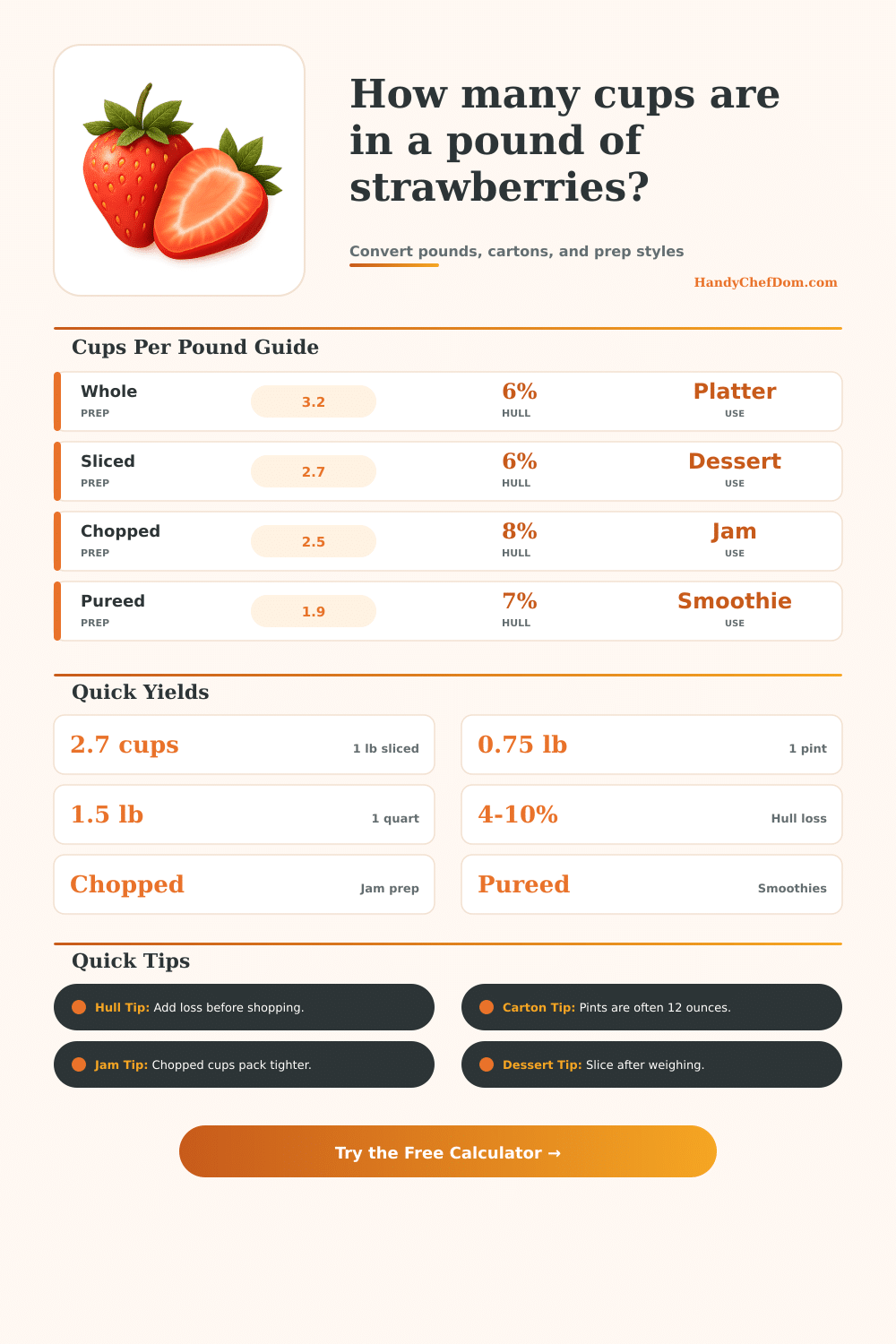
| Prep Style | Typical Cups Per Raw Pound | Best For | Planning Note |
|---|---|---|---|
| Whole hulled | About 3.0 to 3.4 cups | Platters, dipping, garnish | Large air gaps make the cup volume look high. |
| Halved | About 2.8 to 3.0 cups | Fruit salad and snack bowls | Halves settle more evenly than whole berries. |
| Sliced | About 2.5 to 2.8 cups | Shortcake, dessert layers | Use this as the default kitchen estimate. |
| Chopped | About 2.3 to 2.6 cups | Jam, salsa, compote | Small pieces pack tighter in a cup measure. |
| Crushed | About 2.1 to 2.3 cups | Jam mash and sauces | Juice fills gaps and lowers volume. |
| Pureed | About 1.8 to 2.0 cups | Smoothies and coulis | Blending removes most air pockets. |
| Carton | Raw Weight | Sliced Cup Yield | Best Planning Use |
|---|---|---|---|
| Pint carton | About 12 oz or 0.75 lb | About 1.8 to 2.1 cups | Small dessert topping or two smoothie portions. |
| Quart carton | About 24 oz or 1.5 lb | About 3.7 to 4.1 cups | Shortcake for a family table. |
| One pound clamshell | 1 lb | About 2.5 to 2.8 cups | Most recipe conversions start here. |
| Two pound box | 2 lb | About 5.0 to 5.6 cups | Dessert bars or freezer bags. |
| Market flat | About 8 lb | About 20 to 22 cups | Jam day, puree, or party prep. |
| Berry Size | Yield Effect | Typical Hull Loss | Why It Matters |
|---|---|---|---|
| Small berries | Slightly higher cup yield | 7% to 10% | More caps per pound can raise trim loss. |
| Medium berries | Baseline estimate | 5% to 8% | The best general choice for recipes. |
| Large berries | Slightly lower whole yield | 4% to 7% | Fewer pieces and bigger air pockets. |
| Jumbo berries | Lowest whole cup precision | 4% to 6% | Slice before measuring for stable cups. |
| Mixed sizes | Moderate variation | 6% to 9% | Add reserve when shopping by carton. |
| Very ripe berries | Lower firm volume | 8% to 12% | Soft spots and juice reduce usable yield. |
| Recipe Use | Suggested Prep | Cup Portion | Planning Tip |
|---|---|---|---|
| Shortcake | Sliced | 1/2 to 3/4 cup | Add reserve for juicy topping bowls. |
| Jam | Chopped or crushed | Recipe dependent | Weigh before hulling for repeatable batches. |
| Smoothies | Pureed or frozen sliced | 3/4 to 1 cup | Puree cups are denser than sliced cups. |
| Fruit salad | Halved or sliced | 1/2 cup | Use firm berries so the cup holds shape. |
| Dessert garnish | Whole or sliced | 1/4 to 1/2 cup | Whole cups look generous but weigh less. |
| Bakery filling | Chopped | 1/3 to 2/3 cup | Chopped berries spread evenly in layers. |
The problem with strawberries is strawberries. It is not the fruit, but the air around it. A pint of red berries includes some empty space among them. The stuff that lets a platter appear full, even though your pantry remains light. But when you slice those berries for a shortcake, or smash them for jam, suddenly all that air escapes, and those berries settles down, and that pint of fruit vanishes right before your eyes. Guessing at changing pounds to cups is like guessing the future, and if you don’t take into account the shape of your fruit, your guess may be wrong.
No more worry: The calculator on this page do the math. It comes back to density. A whole, hulled strawberry has more space around it. A sliced berry fits into a smaller amount of space, while chopped pieces fill out even more densly. Fruit that’s pureed leaves no room at all for air. If you don’t account for how you plan to prepare your fruit when measuring cups, you’ll be left with inconsistent desserts. You may run out of jam (or drown in soup) before you’re done if you didn’t accounted for the preparation method. With this tool (above), you can choose to chop, slice, or blend, and the yield will reflect that choice. It’s a little thing, but it makes a big difference in what your shopping list show.
How to Measure Strawberries Correctly
And then there’s the hull: it weighs something (those soft spots up by the stem, those green caps). Trimming will cost most batches about four to ten percent of their weight. So if you’re making a precisely-portioned jam, or freezing your berries in pre-measured bags, and don’t account for that weight change, you’ll be starting from a smaller-than-you-think pile of fruit. For fresh-picked or average store-bought berries, a good trim-loss estimate is about six percent. You can plug that amount into the calculator. Adjusting that figure make it easier to see your net weight before you have chopped anything at all, turning an approximate guess into a concrete plan.
The second source of confusion is carton sizes. Not all brands package their products the same way; one brand’s quart isn’t necessarily two pounds, nor is a pint exactly a pound. There are also differences between market flats (which can range greatly by season) and some cartons being slightly lighter than others. If you’re trying to figure it out in your head, converting recipe cups into the number of grocery cartons is error prone. With this calculator, you can start off knowing how many quarts or pints you want to purchase, plug that number in, and instantly know just how many prepared cup it’ll produce. Or you can reverse-engineer from how many cups the recipe calls for, and know how many cartons to grab off the shelf at the store. It makes the logistics of doing a batch cook and heading to grocery store much easier.
Berry size also makes a bigger difference than many people realize. While larger berries are easier to cut into an even thickness, leaving less waste, there may be greater void space left behind when sliced or used whole. Smaller berries has more surface area compared to their total weight, meaning they have more stem area. This results in more waste when trimming. They also do not pack quite as efficienty. The tool adjusts for this kind of variation, so you’re not using a one-size-fits-all guess at how much goes into a cup of something. A pound of tiny wild berries intended for preserving is going to be different than jumbo strawberries purchased for a garnish. Knowing this saves you from getting frustrated when the finished dish doesn’t resemble the picture.
It is another good decision to plan to have a little leftover. Rarely do you need all of your fruit down to the very last gram when making recipes. Spillage happens; slices get broken; sometimes you want leftovers at the ready. A reserve percentage will account for this, so you never end up running short mid-bake. Better to be slightly overstocked than stuck standing in the kitchen questioning your lack of cake-filling abundance. You should of used calculator to help you see that buffer in action so you shop confidently; not warily.
Finally, all this strawberry work comes down to setting expectations: You can’t be certain about the weight of any given stem, nor can you anticipate precisely how dense those berries will be; but you can get a pretty good idea. Knowing your own trimming habits… And how they’ll impact your final amount, will make shopping a bit less risky and a little more mathematical. Next time you grab that carton, consider its air content, and leave your guesswork behind in favor of math.