Tamale Steaming Time Calculator
Estimate tamale steam time from count, filling type, fresh or frozen state, masa thickness, steamer crowding, altitude, pot style, and planned rest time.
| Starting state | Typical batch | Usual range | Primary doneness check |
|---|---|---|---|
| Fresh assembled, uncooked masa | 12 to 24 standard tamales | 60 to 85 minutes | Masa pulls cleanly from husk |
| Chilled assembled, uncooked masa | 12 to 24 standard tamales | 70 to 95 minutes | Masa set plus hot filling center |
| Frozen assembled, uncooked masa | 12 to 24 standard tamales | 85 to 120 minutes | Masa set and center fully hot |
| Reheat cooked from refrigerator | 6 to 18 tamales | 18 to 35 minutes | Center reaches 165°F / 74°C |
| Reheat cooked from frozen | 6 to 18 tamales | 30 to 55 minutes | Center reaches 165°F / 74°C |
| Filling type | Fresh steam note | Reheat target | Thermometer point |
|---|---|---|---|
| Pork, chicken, beef, or dense mixed filling | Use fully cooked filling before assembly | 165°F / 74°C for leftovers | Center of thickest tamale |
| Ground meat filling | Cook filling to 160°F / 71°C before assembly | 165°F / 74°C when reheated | Thick filling pocket |
| Poultry filling | Cook filling to 165°F / 74°C before assembly | 165°F / 74°C when reheated | Center of filling |
| Bean, cheese, vegetable, or sweet filling | Steam until masa is set and center is hot | 165°F / 74°C for cooked leftovers | Center mass, not just edge |
| Steamer setup | Best load | Timing effect | Use case |
|---|---|---|---|
| Tall tamale steamer pot | 18 to 40 upright tamales | Baseline | Traditional upright steaming |
| Stockpot with basket insert | 12 to 28 tamales | Slightly slower | Home kitchen batches |
| Wide pot with low rack | 6 to 18 tamales | Can be faster | Small batches and reheats |
| Bamboo or tiered steamer | 8 to 24 tamales | Slower upper tiers | Mixed sizes or loose stacking |
| Electric cooker steam mode | 6 to 16 tamales | Often faster | Small controlled batches |
| Scenario | Count | State | Filling | Masa | Steam time | Total plan |
|---|
First you start with what shape the dough is in, since just-out-of-the-box tamales take longer then thawed-from-frozen ones. Plugging that figure into calculator above (along with your temperature status) calculates it for you. You won’t have to guess about heat transfer coefficients, which saves you hours of Googling.
Since frozen masa contain ice crystals, those has to melt before the actual corn will cook. So water has to do double-duty. Skip additional time, and you end up with a rubbery center that are still uncooked. It is a small thing, yet it makes all the difference with texture.
How to Cook Tamales Perfectly
Density also matter surprisingly. Because of its thermal mass, a dense hunk of barbacoa beef will soak in heat and take much longer to pass that warmth onto its encasing corn; likewise, a lighter veggie mixture heat through quicker. And the tighter you stuff your fillings, the longer it’ll take for steam to reach the interior. That’s why most folks makes a mistake with the dough setting; the outside should be firm, but center must also be hot enough to be safe to eat. This is what the tool accommodates: It adjusts based off the type of filling so that even if the outer layer appears cooked, you don’t undercook a thick mass of meat in the middle.
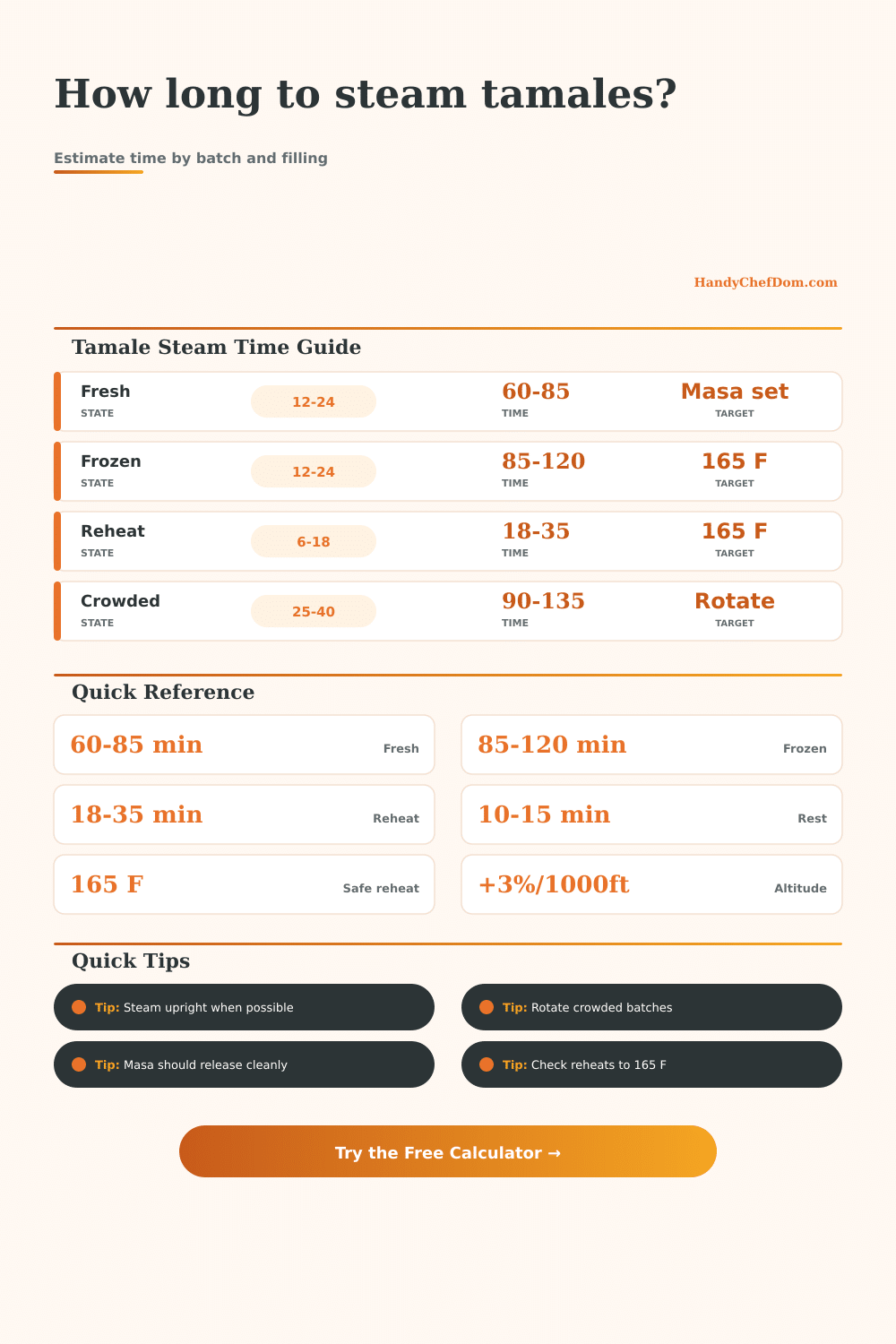
The other thing is how you stack them in the pot. Steam has got to circulate; if you pack them tight together, it can’t get into interior, and those tamales in the middle has cold spots that take longer to resolve. Loosely stacked, a tamale gets steam all around it, which may mean even quicker cooking then a jammed one does. The chart on the page spells this out clearly: Crowded = Minutes on the Clock. I know, I know; it’s tempting to squeeze in another row here or there because you’re saving space, but steam penetration won’t have it. Give ’em room to breathe, and they’ll cook right along.
Another factor is altitude. Being far above sea level can throw home cooks for a loop. That’s because water doesn’t boil as hot up there. If you’re in Salt Lake City or Denver, that water may be boiling at just two hundred ten degrees rather than two hundred twelve. A small difference, I know. But those lost degrees amount to a large delay when steaming over an hour. The calculator takes that elevation factor into account, giving you some minutes back on your estimate and preventing you from pulling that pot out too soon. Most recipes don’t even acknowledge it as a variable.
Remember the cooldown time at the end. Because the tamales will still be setting while cooling off, try not to rip into them right away or they won’t have held together yet, and the tamale could of fall apart. Giving it some time for the masa to solidify gives it just enough time to pull clean away from corn husk. The last test is to see if the corn come free without a goopy mess left behind. That’s your signal that you’re done.
There are no hard-and-fast rules to mastering the timing, just knowing how heat flows through heavy organic material. Use the guide as a solid starting point, then confirm with your eyes (and nose) when it’s right. Let the water temperature stay consistent, keep an eye on the pot, and let the magic happen.
It’ll always be worth the wait. That first perfect bite, creamy corn and all, is a constant reminder that cooking isn’t time wasted at all.