🍉 Watermelon Sugar Calculator
Estimate edible melon, rind loss, cups, cubes, wedges, servings, natural sugar, and hydration water for snack bowls, fruit trays, and picnic batches.
Enter the whole watermelon weight and trim details. The calculator converts rind yield into edible fruit, then maps that fruit into cups, cubes, wedges, per-serving sugar, and hydration water.
| Variety | Typical whole weight | Edible yield | Sugar note |
|---|---|---|---|
| Seedless red picnic melon | 10-18 lb | 62-68% | Balanced, juicy, common for cups and cubes |
| Crimson Sweet red melon | 15-25 lb | 60-66% | Classic sweet red flesh for large trays |
| Sugar Baby icebox melon | 6-10 lb | 64-70% | Dense flesh with strong sweetness for small groups |
| Mini seedless snacking melon | 3-7 lb | 58-66% | Convenient, but rind can be a larger share |
| Yellow flesh dessert melon | 8-16 lb | 60-67% | Often floral and bright with similar sugar range |
| Black Diamond large melon | 20-40 lb | 58-64% | Big fruit with more rind and large serving yield |
| Whole melon | Rind at 34% | Edible flesh | Approx cups |
|---|---|---|---|
| 5 lb mini | 1.7 lb | 3.3 lb | 9.8 cups |
| 10 lb icebox | 3.4 lb | 6.6 lb | 19.7 cups |
| 15 lb picnic | 5.1 lb | 9.9 lb | 29.5 cups |
| 20 lb party melon | 6.8 lb | 13.2 lb | 39.4 cups |
| 30 lb event melon | 10.2 lb | 19.8 lb | 59.1 cups |
| 40 lb giant melon | 13.6 lb | 26.4 lb | 78.7 cups |
| Serving plan | Fruit per person | Sugar estimate | Best cut |
|---|---|---|---|
| Light dessert plate | 1 cup | 9-10 g | Loose cups or small cubes |
| Lunch side | 1.25 cups | 12 g | Spears or cups |
| Picnic side | 1.5 cups | 14 g | One-inch cubes |
| Hydration snack | 2 cups | 18-19 g | Chilled cups |
| Classic wedge serving | 10 oz wedge | 17 g | Rind-on wedge |
| Fruit tray seconds | 2.25 cups | 21 g | Mixed cubes and wedges |
| Picnic batch | People | Cups at 1.5 each | Melon guidance |
|---|---|---|---|
| Small cooler bowl | 6 | 9 cups | One 5 lb mini melon is usually close |
| Family cookout tray | 12 | 18 cups | One 10 lb icebox melon with light buffer |
| Backyard party bowl | 20 | 30 cups | One 15 lb picnic melon after trim |
| Team snack table | 30 | 45 cups | One 20 lb melon plus backup cups |
| Large potluck spread | 50 | 75 cups | Two 20 lb melons or one giant melon |
| Event fruit station | 80 | 120 cups | Several large melons cut in waves |
Have you ever stared at an oversized watermelon at your local supermarket and asked yourself, “Is this thing really worth lugging home? Think about how much rind there is! Yes, it’s certainly imposing out on the vine. But when you bite into the decision to purchase, what was an imposing piece of produce becomes a logistical nightmare. Is it ripe enough to consume? Nah. Is there going to be enough usable flesh to make the cut (so to speak) after you peel off its thick rind?
That’s when things get mathematical: weight doesn’t scale as intuitively than volume. After entering the estimated rind-to-flesh ratio, and the weight of your melon on top of that, the calculator above does all the math for you. Guess what? A twenty-pound fruit doesn’t equal twenty pounds of juice. In fact, most common seedless types lose about thirty to forty percent of their mass to the green exterior and the white pith beneath it; which equates to a lot more than just missing out on a few calories. Forget about those servings, and before you’ve ever picked up a knife, there goes your meal plan.
How to Use a Watermelon Calculator
The calculator turns the edible part of your melon into real world measurements, like cups and cubes. This lets you see how many bowl it will fill instead of having to guess. If you’re catering to others, this math starts to get important. A backyard barbecue with twenty guests is not the same than a Tuesday night snack for two. It’s all about the buffer zone.
If you’re serving watermelon alongside burgers and potato salad, you know you’ve got some wiggle room, so go ahead and plan for one cup per guest. But if it’s the primary refresher for a hot summer day, factor in seconds, and the fact that someone will drop their plate, or spill something. Add another ten to fifteen percent to your calculation to account for empty plates and spills. It’s a minor tweak that’ll save you from the embarrassing moment at the end of the party where you have an empty platter and all eyes fall on you.
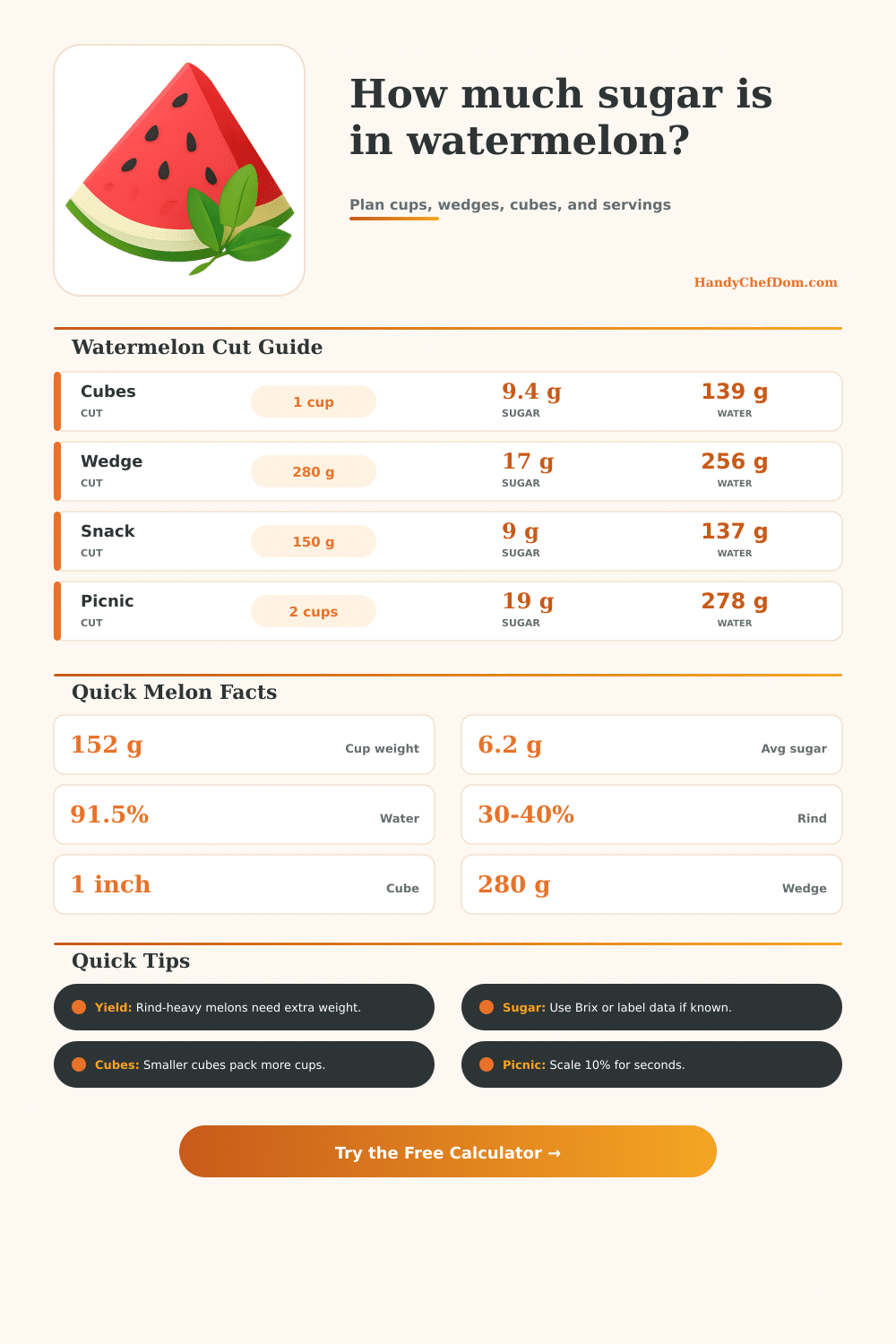
And then there’s sugar content (which also blows our minds). We assume that watermelon = sweet watermelon. WRONG: Growing conditions and type of melon will cause wide variation. For example, an equal-weighted bag of Crimson Sweets won’t be as sweet as its smaller relative, the Sugar Baby icebox melon. With the calculator, you can input how many grams of natural sugar per 100 grams of fruit, greatly changing your nutritional picture. Whether you’re counting calories or just looking for flavor profiles within a bigger meal, this is something to keep in mind. One wedge has almost seventeen grams of sugar, enough to determine whether this belongs on the plate before your entree or after.
The unspoken bonus is hydration. At about ninety-two percent water, watermelon is as good an antidote for dehydration as there is. It’s just an efficient way to stay cool without drinking plain fluids. And because it has that much water, each serving (cup) comes packed with plenty of water plus added sweetness. That’s why watermelons are such favorites among athletes and other people who spend long days working outside; when it gets hot enough to melt your toes, grab some melon slices and you’re rehydrating yourself while replacing electrolytes. Just remember not to overdo it on the overall energy load with the natural fructose.
More than you’d think, this varies with variety. You’ll get less flesh and more rind from small personal melons, compared to large field melons. That convenience-seeming mini seedless melon? It is wasting more potential fruit on the rind. A big one like Black Diamond gives you a bigger bang per pound: the thick rind is a smaller percentage of the whole. When you’re buying for an event where many fruits will be eaten, think about not only the cost per pound but also the overall amount you get.
The cut style matters too. A cup of loose dice or long spears will pack a different amount of fruit into a serving bowl than one-inch cubes packed in there. The smaller pieces will fit tighter into a bowl, giving you more volume of fruit per pound. And large wedges look nice and substantial, but they take up more space between each other on a platter. Because the tool accounts for how much space each type packs, it ensures that your headcount equals your actual supply. Running out because you guessed too low on how much space the fruit would take up on the table is bad. A heads up will save you some freak-out come the big day.
Many folks like their watermelon pre-cut; this way it can have a chance to blend its flavors and slightly soften its texture. Plus, you can dish out portions evenly instead of trying to juggle cutting slices while everyone else is staring at the pile of juice running onto the floor. Stash it in the fridge until serving time for a nice snap to the teeth. Once warm, watermelon doesn’t stay good for long, either in texture or flavor.
The bottom line is satisfaction without waste. Knowing the yield allows you to purchase just the right quantity of whatever it is you’re making, whether for a crowd or a toddler snack. You won’t have to guess anymore because you would of known that every single bite of the fruit on your plate was worth it. And that’s the difference between eating in the sun (and having everyone around you doing the same) versus being stuck indoors with no idea if there’ll be anything left at the end.