🍚 Sugar in White Rice Calculator
Estimate natural sugar, added sugar, total sugar, carbs, and per-serving target percent for plain rice, sushi rice, rice milk, or rice pudding.
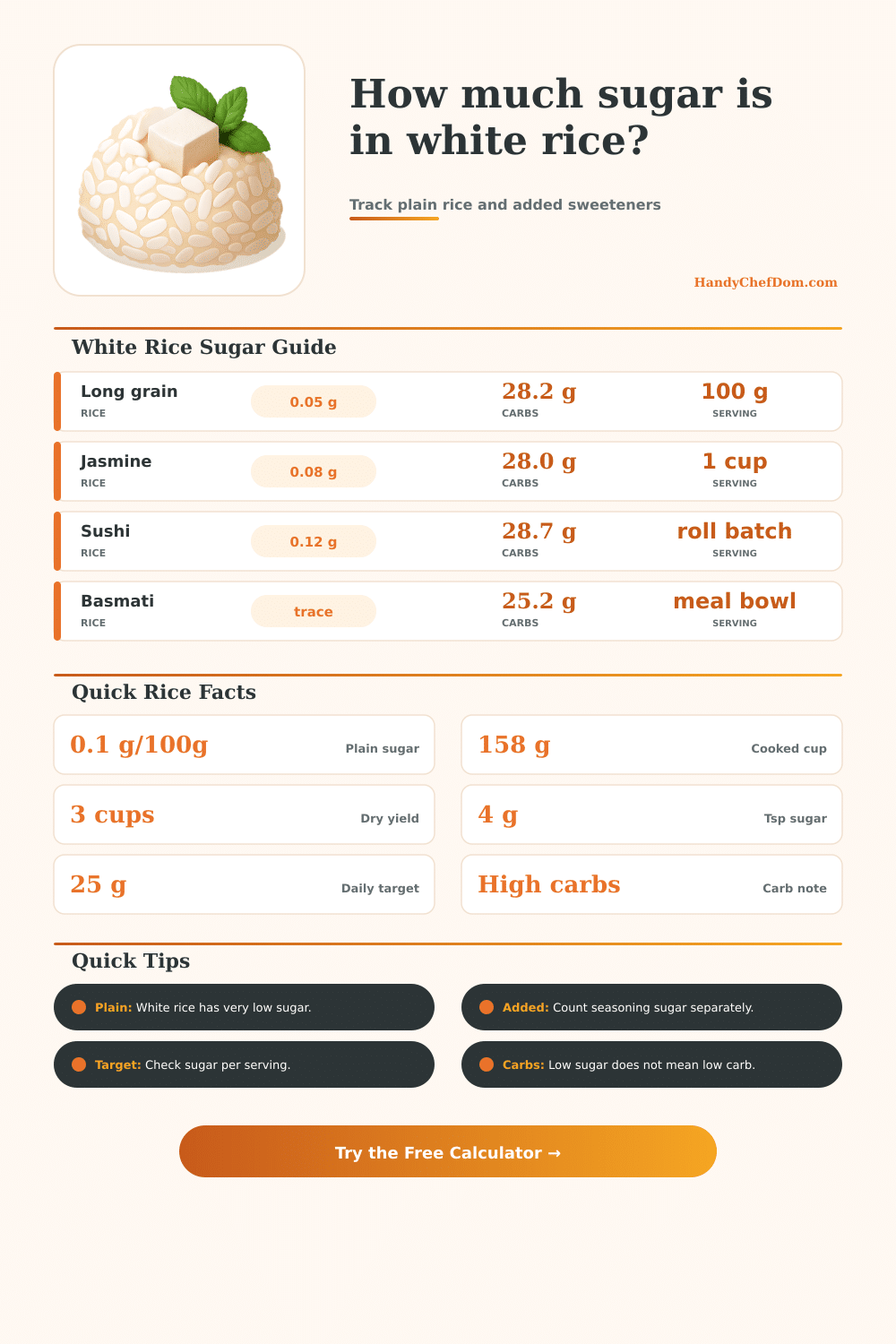
White rice naturally has very little sugar, about 0.1 g per 100 g cooked. This calculator keeps natural rice sugar separate from sweetener added through sushi seasoning, rice milk, or pudding.
Plain white rice is low in sugar, but it is still a high carbohydrate food. Added sugar is counted separately so sweetened rice dishes stay clear.
| Rice Type | Sugar Per 100g | Carbs Per 100g | Cooked Cup |
|---|---|---|---|
| Long grain white | 0.05 g | 28.2 g | 158 g |
| Jasmine white | 0.08 g | 28.0 g | 158 g |
| Sushi white | 0.12 g | 28.7 g | 174 g |
| Basmati white | 0.05 g | 25.2 g | 158 g |
| Serving Use | Cooked Rice | Approx Weight | Natural Sugar |
|---|---|---|---|
| Small side | 1/2 cup | 79 g | 0.04-0.09 g |
| Regular side | 3/4 cup | 119 g | 0.06-0.14 g |
| Bowl base | 1 cup | 158 g | 0.08-0.19 g |
| Large plate | 1 1/2 cups | 237 g | 0.12-0.28 g |
| Meal prep box | 2 cups | 316 g | 0.16-0.38 g |
| Added Sugar Scenario | Typical Add | Added Sugar | Main Effect |
|---|---|---|---|
| Plain steamed rice | None | 0 g | Only rice sugar |
| Light sushi rice | 2 tsp | 8 g | Mild sweetness |
| Classic sushi rice | 1 tbsp | 12.5 g | Sweet tang |
| Sweet rice milk | 2 tbsp | 25 g | Drink sweetness |
| Rice pudding | 1/4 cup | 50 g | Dessert level |
| Rice Type | Dry Cup Weight | Cooked Yield | Best Calculator Note |
|---|---|---|---|
| Long grain white | 185 g | 3.0 cups | Everyday default |
| Jasmine white | 185 g | 3.0 cups | Bowls and sides |
| Sushi white | 190 g | 2.7 cups | Seasoning common |
| Basmati white | 190 g | 3.0 cups | Lower carb estimate |
White rice contain a certain amount of starch, and white rice also contains a very small amount of natural sugar. The amount of natural sugar that white rice contains are consistent across the various varieties of white rice. Thus, the natural sugar content of white rice dont change based on the type of white rice that is use in a recipe.
It is important to distinguish between the natural sugar that is contained within white rice from the added sugar that is introduced to white rice as part of the recipe. Adding a sweetener to rice will have a more greater effect upon the total sugar content of the rice then that white rice will have upon the sugar content of the rice. The total sugar content of white rice will depend upon the sweeteners that is added to the rice.
Natural and Added Sugar in White Rice
For example, one may add sushi vinegar to rice prior to serving, condensed milk may be added to rice when preparing rice pudding, and sweeteners may be added to rice milk in the amount of teaspoon to prepare rice milk. Each of these sweeteners can be entered into the calculator in the amount of gram, teaspoons or tablespoons, and the calculator will calculate the total sugar content of the rice that is prepare with these sweeteners. The calculator also permits the count of the number of individual that will consume the prepared white rice, which can assist in determining the amount of sugar that each individual will consume.
In addition to measuring the total amount of sugar that is contained within a serving of white rice, it is also important to determine the carbohydrate content of white rice. Carbohydrate content is an important measurement of white rice due to the way in which the starch content of white rice can rapidly affect the blood sugar of the individuals that consumes white rice. The calculator will report the total carbohydrates and the sugar content of white rice to allow for comparisons between these two measurement.
White rice can be prepared in a variety of ways, such as in the incorporation of protein or fat with the rice. Such pairing will have some effect upon the absorption of the carbohydrates from white rice, but will not change the total carbohydrate content of that rice. It is important to review both the carbohydrate and sugar content of white rice; reviewing only the sugar content may lead to the incorrect belief that the white rice have a low impact upon the body.
White rice comes in a variety of types, such as jasmine rice and basmati rice. Each variety of rice may have slightly different texture and yields when prepared. For instance, jasmine rice tends to be sticky, sushi rice is more starchier than long grain rice, and basmati rice may contain a slightly lower carbohydrate content than other types of rice.
Each of these types of rice will have the same amount of natural sugar as white rice, but will have a different cooked volume of rice. The calculator accounts for the different amounts of dry rice that is cook to determine the amount of sugar that should of been considered with each type of rice. Many individuals make the mistake of combining the natural sugar content of white rice with the added sugar that is included in the recipe.
Plain white rice will contain very little sugar, but rice products like rice pudding or rice milk will contain a high amount of added sugar. Thus, it is important to separate these two type of sugar if an individual desires to remain within a target for the daily consumption of added sugar. The calculator accounts for both natural and added sugar in separate category.
The portion size of white rice will impact the total sugar content of that rice. A small portion of rice will contain less total sugar than a large portion of the same type of rice. Thus, the percentage of sugar that is contained in a portion of rice change with the portion size of that rice.
It is important to use the serving count function of the calculator to determine the portion size of rice that is cooked, rather than guessing at the portion size of the rice. Rice is not typically the main source of added sugar in most diets. The majority of added sugar that is contained in white rice are from the sweeteners that are added to rice as part of the recipe.
Thus, the calculator can help to make the decisions regarding the type and amount of sweetener used measurable. Through determining the source of the sugar content of rice, individuals can make decisions regarding the flavor of the rice, while maintaining the ability to track the total sugar content of white rice in their diet.