🍕 Mozzarella Cheese on a Pizza Calculator
Estimate mozzarella from true pizza area, crust rim, cheese style, sauce level, toppings load, browning target, and servings.
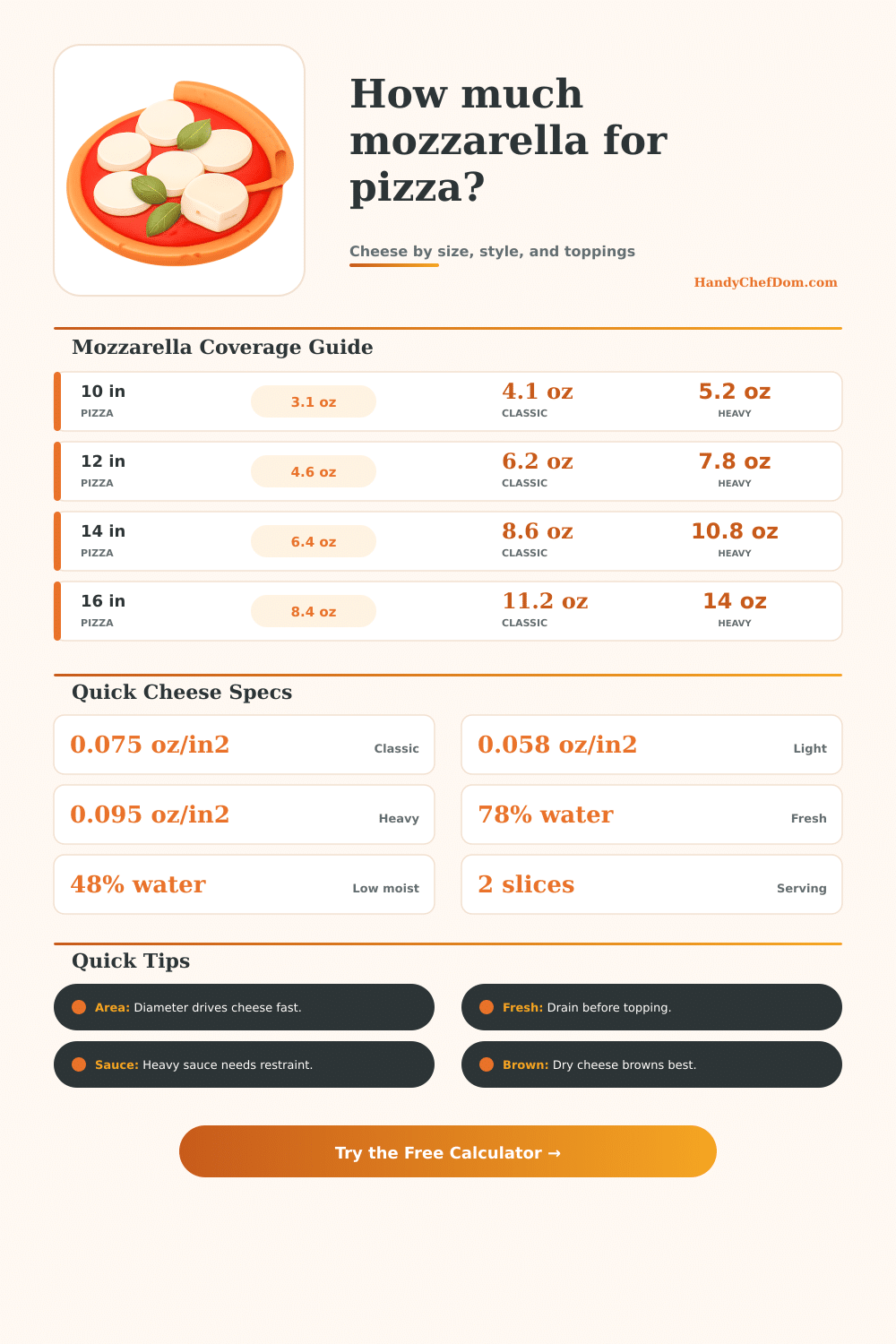
Classic shredded low-moisture mozzarella often lands near 0.070 to 0.085 ounce per square inch of topped pizza area. This calculator deducts the crust rim, then adjusts for fresh cheese moisture, sauce, toppings, and browning.
| Diameter | Full area | Classic cheese | Typical slices |
|---|---|---|---|
| 8 in | 50 sq in | 2.8 to 3.5 oz | 4 slices |
| 10 in | 79 sq in | 4.0 to 4.8 oz | 6 slices |
| 12 in | 113 sq in | 5.8 to 6.8 oz | 8 slices |
| 14 in | 154 sq in | 7.8 to 9.2 oz | 8 slices |
| 16 in | 201 sq in | 10.2 to 12.0 oz | 8 slices |
| 18 in | 254 sq in | 12.8 to 15.2 oz | 8 slices |
| Cheese style | Amount factor | Moisture cue | Browning cue |
|---|---|---|---|
| Whole milk low-moisture | 1.00x | Moderate | Golden spots |
| Part-skim low-moisture | 0.96x | Drier | Fast browning |
| Fresh slices | 1.18x | Very wet | Soft melt |
| Fresh pearls | 1.12x | Wet pockets | Patchy melt |
| Diced block | 1.04x | Moderate | Slow melt |
| Mozz-provolone blend | 0.98x | Drier blend | Deep color |
| Variable | Light | Classic | Heavy |
|---|---|---|---|
| Sauce amount | 0.98x | 1.00x | 0.94x wet |
| Toppings load | 0.97x veg | 1.00x meat | 1.08x supreme |
| Browning target | 0.98x pale | 1.00x golden | 0.94x deep |
| Crust rim | 0.25 in | 0.45 in | 0.85 in |
| Buffer | 0% | 5% | 10% plus |
| Pizza plan | Diameter | Coverage | Mozzarella range |
|---|---|---|---|
| Personal thin crust | 8 to 10 in | Light | 2.5 to 4.5 oz |
| Family cheese pizza | 12 to 14 in | Classic | 6 to 9 oz |
| Large pepperoni | 14 to 16 in | Classic | 8 to 12 oz |
| Extra cheese pie | 14 to 18 in | Generous | 11 to 18 oz |
| Fresh margherita | 10 to 12 in | Sparse | 3 to 5 oz |
| Party pair | 16 in each | Classic | 20 to 24 oz |
There’s more to determining the proper amount of cheese than simply considering the package size. Consider the sauce, crust, toppings, and what the cheese do in the oven. If you don’t use enough cheese it feels sparse on a pizza. Use too much cheese and you’ll have burnt cheese around the edge and a soggy middle. Aim for the proper balance with ingredients you’re using.
The starting place is diameter: Area increases at a rate faster then most folks imagine. A two-inch increase in size adds far more surface than tape measure suggests. In other words, bigger pizzas requires substantially greater amounts of cheese compared to their smaller cousins. However, not all of that circle’s surface represent real cheese-bearing territory. Because there’s an outer border that never gets anything on it, that reduces the actual surface available for cheese. That border varies depending on type of crust. Even one small tweak changes your cheese requirement before you account for any other variable.
How to Choose the Right Amount of Cheese
That’s another reason cheese style matters: Not all melted mozz is equal in weight. If you’re cooking with low-moisture shredded mozzarella, it has a medium amount of water and give you a nice stretchy, clean-browning result. A pearl of fresh mozzarella have far more water, meaning you’ll need to add more weight to achieve the same visual coverage. That additional moisture will impact interaction between cheese and any wet toppings or sauce as well. Some recipes instruct cooks to blot their pearls (or slices) before adding them to the pie.
The reverse is true of topping load and how much sauce goes on. More meaty toppings mean more space for extra cheese. This also catches air bubbles to help with browning. If you’re aiming for no-wet-center, a thinner sauce means more cheese; but veggies gives off water when they cook, drawing the cheese coat back downward. It also depends on your personal preference for how things brown. If you like a pale melt, you may be able to use a little extra cheese. But with a leopard-spotted Neapolitan top, you’d better go lighter so the cheese doesn’t releases too much juice before it gets color.
Plug in these variables (they’re real), and the calculator does the rest. It looks at crust style, moisture level, toppings, sauce, and your target browning. It then adjust the base coverage rate and scales it for as many pizza as you might be making. It will tell you total cheese needed, how much per pizza, and how it breaks down per slice or per serving. These numbers makes a difference if you’re shopping or need to scale up a recipe for a crowd. They take the guesswork out of how much is enough so you don’t run out, and they stop you from having a bag of leftover shreds in the fridge.
No formula will account for your specific oven’s quirks. Maybe yours is hotter on one side. It might take longer to heat up again once the door opens. Or, it perhaps browns the cheese faster different than the crust. Or maybe your dough was too wet (or not wet enough) to begin with, because a wetter dough produce steam, which affects the cheese layer as well. Use the weight provided by the calculator as your starting point, and let your oven… And your personal dough-handling habits, guide you as to whether to increase or decrease that number the next go-around.
Of course, there’s no such thing as perfect math in cooking. But getting rid of the largest variables makes the final tweaks small and purposeful instead of guesswork that can ruin a batch of dough. After you get an idea of about how much cheese goes on a certain type of pie, the rest falls into place more easly so you can repeat it again and again.