🫑 Bell Pepper Calorie Calculator
Estimate edible weight after stem and seeds, convert whole peppers to cups, and calculate raw or sauteed calories, carbs, fiber, and vitamin C.
Choose a pepper color and measure by whole peppers, edible weight, sliced cups, or chopped cups. The calculator adjusts stem and seed loss, optional trim, and raw-to-sauteed yield.
| Pepper Type | Calories | Carbs | Fiber | Vitamin C |
|---|---|---|---|---|
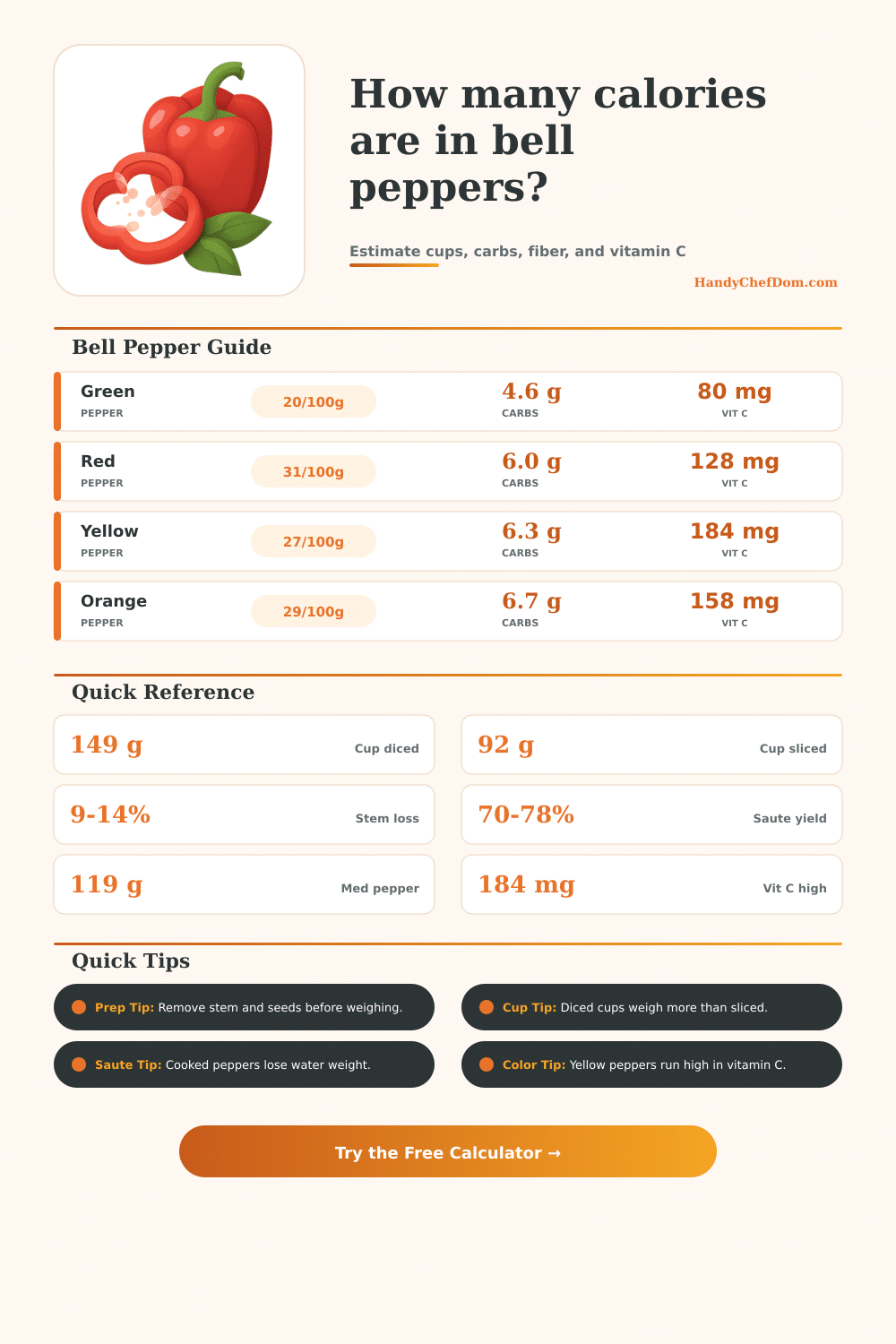
| Green bell pepper | 20 kcal / 100 g | 4.6 g | 1.7 g | 80 mg |
| Red bell pepper | 31 kcal / 100 g | 6.0 g | 2.1 g | 128 mg |
| Yellow bell pepper | 27 kcal / 100 g | 6.3 g | 0.9 g | 184 mg |
| Orange bell pepper | 29 kcal / 100 g | 6.7 g | 2.0 g | 158 mg |
| Purple bell pepper | 24 kcal / 100 g | 5.2 g | 1.8 g | 95 mg |
| Mini sweet peppers | 29 kcal / 100 g | 6.7 g | 1.8 g | 142 mg |
| Mixed bell peppers | 27 kcal / 100 g | 5.9 g | 1.9 g | 135 mg |
| Baby bell peppers | 28 kcal / 100 g | 6.4 g | 1.9 g | 148 mg |
| Size | Whole Weight | Edible Yield | Sliced Cups | Chopped Cups |
|---|---|---|---|---|
| Mini pepper | 24 g | 84% | 0.22 cup | 0.14 cup |
| Small pepper | 74 g | 87% | 0.70 cup | 0.43 cup |
| Medium pepper | 137 g | 87% | 1.29 cups | 0.80 cup |
| Large pepper | 164 g | 88% | 1.57 cups | 0.97 cup |
| Extra large pepper | 200 g | 88% | 1.91 cups | 1.18 cups |
| Measurement | Raw Weight | Calories | Carbs | Fiber |
|---|---|---|---|---|
| 1 cup sliced green | 92 g | 18 kcal | 4.2 g | 1.6 g |
| 1 cup chopped red | 149 g | 46 kcal | 8.9 g | 3.1 g |
| 1 medium yellow | 119 g edible | 32 kcal | 7.5 g | 1.1 g |
| 1 large orange | 144 g edible | 42 kcal | 9.6 g | 2.9 g |
| 6 mini peppers | 121 g edible | 35 kcal | 8.1 g | 2.2 g |
| Prep Style | Yield | Cup Density | Best Input | Calculator Note |
|---|---|---|---|---|
| Raw sliced | 100% | 92 g / cup | Sliced cups | Light cup fill |
| Raw chopped | 100% | 149 g / cup | Chopped cups | Dense cup fill |
| Raw halves | 100% | 110 g / cup | Whole peppers | Use edible weight |
| Sauteed strips | 70-78% | 120 g / cup | Raw weight | Water cooks off |
| Meal prep mix | 74% | 132 g / cup | Mixed cups | Use batch total |
When you go to the grocery store, most of us think that all bell peppers are alike. Sure, they may be built the same way but that doesn’t mean they’re nutritionally equal. Maybe you’re keeping track of certain macronutrients or aiming for a certin amount of Vitamin C per day. In these cases, knowing the difference here can make a big difference.
While your eyes might tell you a red pepper tastes sweeter than its green cousin, you’d be surprised by what the color says about the actual nutritional makeup. Essentials: red peppers is ripe and ready to eat after hanging on the vine long enough to turn bright red. They have had more time to mature and produce sugar from starch. This means there’s less carb content…but more importantly, more nutrients! I will explain more about this in a second.
Why Pepper Color and Cooking Method Matter for Nutrition
Yellow and orange peppers tend to sit somewhere in the middle providing a balance of both crunch and sweetness. And green? Green bells get plucked early, meaning fewer calories, but also less of the antioxidants developed with time.
The calculator above take away the need to do any conversions or coefficients yourself. Just input your desired type of pepper (the calculator support red, yellow, orange and green) and how it’s being prepared. Then, let the calculator do the rest.
Not everything about the vegetable is edible. In fact, if you purchase a full green bell pepper, for example, you’re going to be throwing away about 10-15% of its mass: the seeds, the center core and the stem itself. If you weigh your pepper before removing the seeds and log that weight as what you ate, you will always over-estimate the calories and fiber you actualy took in. This built-in yield loss correction factor adjust the numbers so they represent what makes it onto your plate, instead of what rested on your cutting board.
Another factor you’re going to start seeing once you get beyond simple nutritional logging: Preparation style matter. For instance, peppers is mostly water (so they have a big volume, but not a high calorie density), until they’re roasted or sauteed, at which point all that water cook off. So while one cup of raw peppers might contain a few hundred grams, a cup of cooked peppers would be much denser with nutrients (and therefore carry more calories and carbs). That is, a cup of cooked peppers will be lighter than the same amount of raw peppers, but it will still contain just as many nutrients in that smaller amount. It is a small detail but it matters.
The chart on that page spell it out: How much did the yield change? From raw sliced peppers to cooked sauteed strips? You need to know whether you measured by original weight (raw), or by resulting cooked volume. And mixing those two up will cause errors that can compound over the week. Surprisingly, size of your cut really affects the portion accuracy as well. For example, a cup of chopped peppers is much heavier than a cup of those same peppers sliced up since the slices has more air space in between. If you log a recipe calling for one cup of diced red pepper as one cup of sliced peppers, your carb count will be off by a significant amount. To account for how exactly you cook, you can choose between mixed, chopped and sliced cuts so that what goes into your tracker match what was cooked. It may seem like a small thing, but for anyone who needs precision with their data, it makes all the difference.
If you’re sure about weight-to-volume conversions here, you don’t need to weigh each individual slice. But there’s something else: Aside from the nutrition stats, bell peppers (of all colors) also happen to be super-adaptable. They can be eaten raw as part of a crudité platter; slow-cooked with onions into a caramelized fajita mixture; or used in things like quick snacks and complex stir-fries. Red and yellow varieties is particularly high in vitamin C (which will help power up immunity this time of year). And unlike heavier-calorie veggies, you get the benefit of micronutrients without all that extra heaviness when snacking on a pepper. Knowing precisely how much pepper to add to your meal enables you to build a more balanced plate. This applies whether it is a complex stir-fry dish or simply a quick bite to eat. Once you’ve got the parameters dialed in, the math do the rest.
Then just sit back, eat some color, and enjoy the crunch. Knowing exactly what it is you’re fueling up with.