Tomato Paste in Taco Meat Calculator
Estimate tomato paste tablespoons for taco meat by ground meat pounds, seasoning, broth, richness target, simmer reduction, taco count, servings, and filling texture.
A classic taco skillet often lands near 1 to 2 tablespoons tomato paste per pound of ground meat. This calculator adjusts that base for meat fat level, seasoning load, broth amount, richness target, simmer reduction, taco size, mix-ins, and servings.
Tomato Paste Plan for This Taco Meat
Your taco meat paste, liquid, seasoning, and yield plan will appear here after calculation.
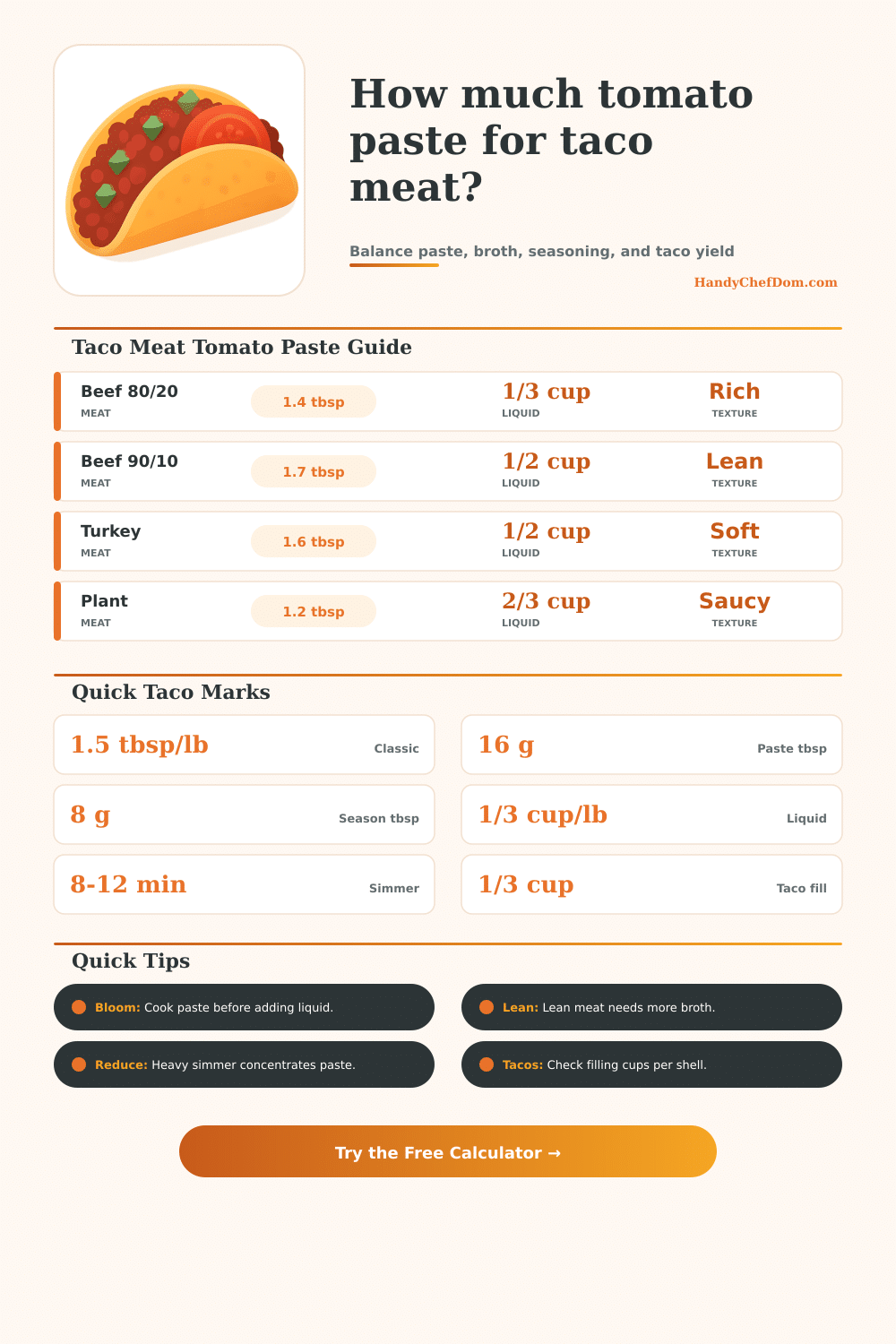
Tomato Paste by Ground Meat Type
| Ground meat | Starting paste | Liquid cue | Why it changes |
|---|---|---|---|
| Ground beef 80/20 | 1.3 to 1.5 tbsp per lb | 1/3 cup per lb | Fat carries tomato richness, so paste can stay moderate. |
| Ground beef 90/10 | 1.6 to 1.8 tbsp per lb | 1/2 cup per lb | Lean meat needs moisture and stronger sauce body. |
| Ground turkey | 1.5 to 1.8 tbsp per lb | 1/2 cup per lb | Milder meat benefits from paste and broth support. |
| Ground chicken | 1.4 to 1.7 tbsp per lb | 1/2 cup per lb | Light flavor works best with a softer tomato base. |
| Plant crumbles | 1.0 to 1.4 tbsp per lb | 2/3 cup per lb | Crumbles absorb liquid quickly and can taste paste-heavy. |
Seasoning, Paste, and Liquid Balance
| Skillet style | Paste per lb | Seasoning per lb | Liquid per lb | Best finish |
|---|---|---|---|---|
| Light tomato | 0.9 to 1.2 tbsp | 0.8 to 1.0 tbsp | 1/4 to 1/3 cup | Meat-forward crumble |
| Classic taco meat | 1.3 to 1.7 tbsp | 1.0 to 1.2 tbsp | 1/3 to 1/2 cup | Clingy red sauce |
| Rich tomato-chile | 1.8 to 2.2 tbsp | 1.1 to 1.4 tbsp | 1/2 cup | Deep spoonable filling |
| Burrito or bowl | 1.5 to 2.0 tbsp | 1.0 to 1.3 tbsp | 1/2 to 2/3 cup | Moist reheatable meat |
| Dry hard shell | 1.0 to 1.4 tbsp | 0.9 to 1.1 tbsp | 1/4 cup | Neat shell filling |
Reduction and Simmer Texture Table
| Reduction choice | Liquid retained | Paste impact | Texture cue | Use when |
|---|---|---|---|---|
| Loose covered simmer | 80 to 88 percent | Softer tomato | Juicy meat | Bowls or reheating |
| Normal simmer | 62 to 72 percent | Balanced | Clingy sauce | Most tacos |
| Thick open pan | 45 to 58 percent | Concentrated | Rich and thick | Loaded tacos |
| Meal prep moist | 74 to 84 percent | Mellow | Reheats well | Bowls and leftovers |
| Dry crumble finish | 35 to 48 percent | Intense | Firm filling | Crisp shells |
Taco Count and Filling Volume Table
| Taco style | Cups per taco | 2 lb meat yield | Good serving plan | Paste note |
|---|---|---|---|---|
| Street taco | 0.28 to 0.33 cup | 14 to 16 tacos | 3 small tacos | Keep sauce clingy |
| Regular shell | 0.38 to 0.45 cup | 10 to 12 tacos | 2 tacos | Classic balance |
| Loaded taco | 0.50 to 0.58 cup | 8 to 9 tacos | 2 big tacos | Use rich sauce |
| Burrito or bowl | 0.60 to 0.75 cup | 6 to 8 scoops | 1 bowl | More liquid helps |
| Nacho topping | 0.20 to 0.30 cup | 16 to 20 portions | Shared tray | Sauce can be loose |
Taco meat needs more than just a good appearance: A spoonful (or two) of tomato paste will also give it some body, balance out all the grease from the meat, and help the seasoning cling rather then slide right off. Too many home cooks eyeball this amount and then end up with an over-sauced dish where the flavor gets lost, or one that’s too flat-tasting. How much? It all depends on what kind of meat you choose.
If you’re starting with an 80/20 mix, for example, thats already plenty rich. You will need less paste to achieve same richness. Leaner meats like ground turkey also loses some fat as they brown. This makes the resulting filling taste dry unless you add just a little more paste (and a splash more liquid to carry it). As for plant crumbles, these sop up the broth in no time flat so any change in the liquid-to-paste balance will cause them to become dry.
How to Make Perfect Taco Meat
The calculator above do all this math for you, once you’ve entered the type of meat you’re using and your desired texture. That way you don’t have to guess at how those seemingly tiny adjustments adds up.
The liquid is a close second to the paste. Broth adds its own flavor; I don’t need as much seasoning packet if I use broth instead of water. A mix of tomato sauce and water make the red color more intense quickly while adding weight. Because it is thicker, it will also thicken up pan more quickly. That means the reduction time vary. The tool considers each variable and suggests more or fewer cups of liquid depending on how rich you want your sauce.
Many recipes secretly fall down here: simmering time. For good reheating-bowl recipes, a short covered simmer maintains juiciness and a looser structure. An open pan reduction turns tomatoes into a thick concentration that clings to every crumble, the kind of thing you want in loaded tacos. How much liquid’s left post-reduction? The calculator tells you so you know if the reduced result will fit the intended volume into as many shells.
If you have a texture goal in mind, that changes the numbers too. Crisp shells need a tighter, crumbly finish that uses less paste (and probably less liquid as well). Saucier fillings like burritos can handles more broth, since the excess moisture will get absorbed in the tortilla. Pick your desired style, and the tool will balance the paste accordingly rather than having you eyeball the mix.
There is no magic formula. There is one practical habit that’s better then all others. Wait until the paste blooms, then taste meat before you add all the liquid. Does the tomato seem raw or sharp? Leave it for another minute over the heat. Is it already nicely balanced? It’ll just get better with the rest of its time on the simmer. Though the calculator serves as a solid starting point, that fast test ensures final dish stays true to your own stove and skillet.
Mastering the paste transforms taco night from assembly into building. The seasoning gets in the meat, the meat sits inside the sauce, and each bite taste as intended.