Zone Diet Calculator
Estimate daily Zone blocks, macro grams, and per-meal portions with practical presets, unit conversion, and food yield references for faster meal planning.
Choose planning method, goal, and food source. The calculator returns daily blocks, macros, calories, and per-meal portions, plus raw versus cooked protein amounts.
| Protein Source | Protein / 100g | Cooked Yield | Raw for 25g |
|---|---|---|---|
| Chicken breast | 31 g | 75% | 81 g |
| Salmon | 25 g | 80% | 100 g |
| Lean beef | 26 g | 74% | 96 g |
| Tofu | 12 g | 97% | 208 g |
| Group Size | Meal Blocks Each | Total Blocks | Total Protein |
|---|---|---|---|
| Dinner for 4 | 3 | 12 | 84 g |
| Family of 6 | 3 | 18 | 126 g |
| Party of 12 | 2 | 24 | 168 g |
| Event for 25 | 2 | 50 | 350 g |
The Zone diet works because the diet requires individuals to think about there food in terms of food blocks instead of thinking about calories. Each food block has a set ratio of proteins, carbohydrates, and fat to it. Because each food block has a set ratio of these substances to its meals, individuals does not have to guess at whether the meals have the correct amount of each of these substances.
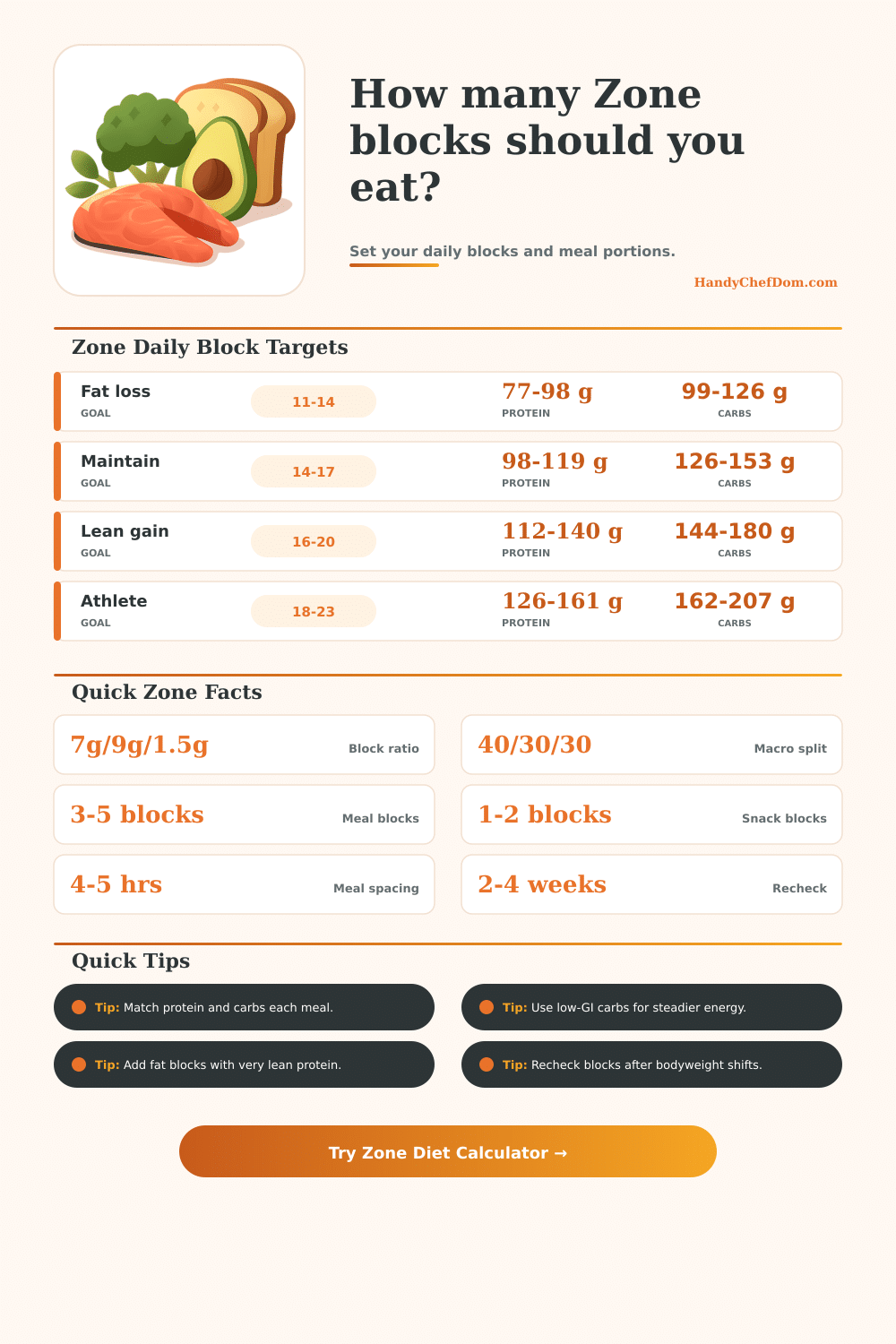
The diet was created in such a way that an individual’s blood sugar and insulin levels would remain steady and there hunger signals would be more easy predicted. Thus, if an individual can determine the number of food blocks that they require to eat each day, they can easily create a list of the foods that they will purchase to ensure that there meals will contain the appropriate number of food blocks. The calculator that is include with the Zone diet calculates the amount of food blocks that an individual should consume each day based off their body weight, their activity level, and their goal profile for their body composition.
How the Zone Diet Works
Each of these factors is important in determining the number of food blocks that each individual should consume daily because each individual has a different body composition. For instance, an individual who sits at a desk for most of the day will require fewer food blocks than an individual who runs every morning. Thus, by incorporating these factors into the calculator, it ensures that an individual will not attempt to copy the number of food blocks of an individual with a different lifestyle from there own.
By choosing a protein source for the diet, the individual is not just choosing the type of food that they will consume. The choice of protein will impact the raw weight of the food that the individual purchases as well as the size of the cooked food portion of that diet. For instance, proteins like chicken breast and lean beef contain more protein per gram of raw food than proteins like salmon and tofu.
Thus, if an individual chooses proteins that are high in protein per gram of raw food, they will have to purchase less of the food to obtain the same amount of protein as an individual who chooses a protein with lower protein per gram of raw food. The reference table included with the diet explains the protein content of the various proteins, as well as the raw weight of each food that an individual will require to consume the amount of protein that they should consume daily. Thus, the reference table allows individuals to make an informed choice of protein without having to perform the calculations in their heads while they are at the store.
The block system is useful not just during meals but also between meals. By ensuring that each meal contains roughly the same number of food blocks, an individual will not consume too much food for some meals and too little for others. Furthermore, by spacing the meals four to five hours apart from each other, the individual will experience even hormone throughout the day.
Many individuals who have attempted the diet report that they no longer need to consume snacks during the afternoon. Additionally, if an individual’s appetite changes for more than one week, they can use the adjustment field to either increase or decrease the number of food blocks that they consume daily. A common mistake with the diet is treating the 40-30-30 ratio as an average daily intake of protein, carbohydrates, and fats.
The 40-30-30 ratio will only work if the amount of protein and carbohydrates is evened out during each meal that is consumed. For instance, if all of the protein is consumed during breakfast but fruits are consumed during lunch, there will be no protein and carbohydrate balance throughout the day. To prevent this mistake, the calculator calculates the amount of protein and carbohydrates that should be consumed at each meal.
Thus, the calculator will inform the individual before they begin to eat that they are consuming too much of one group of nutrients compared to the other. Body weight is just one of the variables that will change the amount of food that an individual should consume. Other variables include the amount of training that an individual performs each week, as well as the sleep and stress level of that individual.
Both of these variables can be accounted for in the calculator so that the individual does not have to change the entire diet if they experience any changes to these factors. For instance, if an individual has had a week filled with poor sleep or intense training, they may require more food blocks than they otherwise would. The activity and appetite selectors allow for these changes to be made to the diet without having to alter the entire diet.
The portion planning that is created for groups of individuals is performed with the same logic that is used for individuals. For instance, if an individual decides that they would like to cook meals for four individuals, and if each individual should consume three food blocks, the total amount of protein that should be cooked is easily calculated. The reference tables allow individuals to easily determine the weight of each food required to ensure that the meals will contain the amount of protein that is required by each individual in the group.
Thus, these reference tables make it easy for the individual to prepare meals for groups without having to perform any math in their heads while at the store. The food and meal plan should be rechecked every two to four weeks. The body weight of an individual may have changed, their activities may have changed, and what may be appropriate for the body at the beginning of the year may not be appropriate for the body four month in.
Thus, by incorporating the ability for the individual to recheck the plan with the calculator, it becomes a habit for the individual. Furthermore, if the individual adjusts the meal plan according to the changes in the body and activities, the meal plan will automatically change with the body and activities of that individual. The Zone diet requires the individual to consume foods that contain a balance of protein, carbohydrates, and fats in the same ratio throughout the day.
However, it does not require the individual to consume foods that contain the same amount of each of these nutrients. Thus, if an individual can determine the number of food blocks that should be consumed daily and can distribute them equally among the meals that are consumed daily, the individual can consume foods that contain more of one nutrient than the others without disrupting the system altogether. Thus, the diet allows for some flexibility in the type of meals that are consumed which helps the diet to work in the real world as opposed to being a theoretical diet.