White Rice To Water Ratio Rice Cooker Calculator
Scale white rice batches, compare cooker styles, and check yield, servings, and cook time before you start.
The ratio stays in white-rice cooker terms, while the input fields switch between cups and grams so the batch still feels natural.
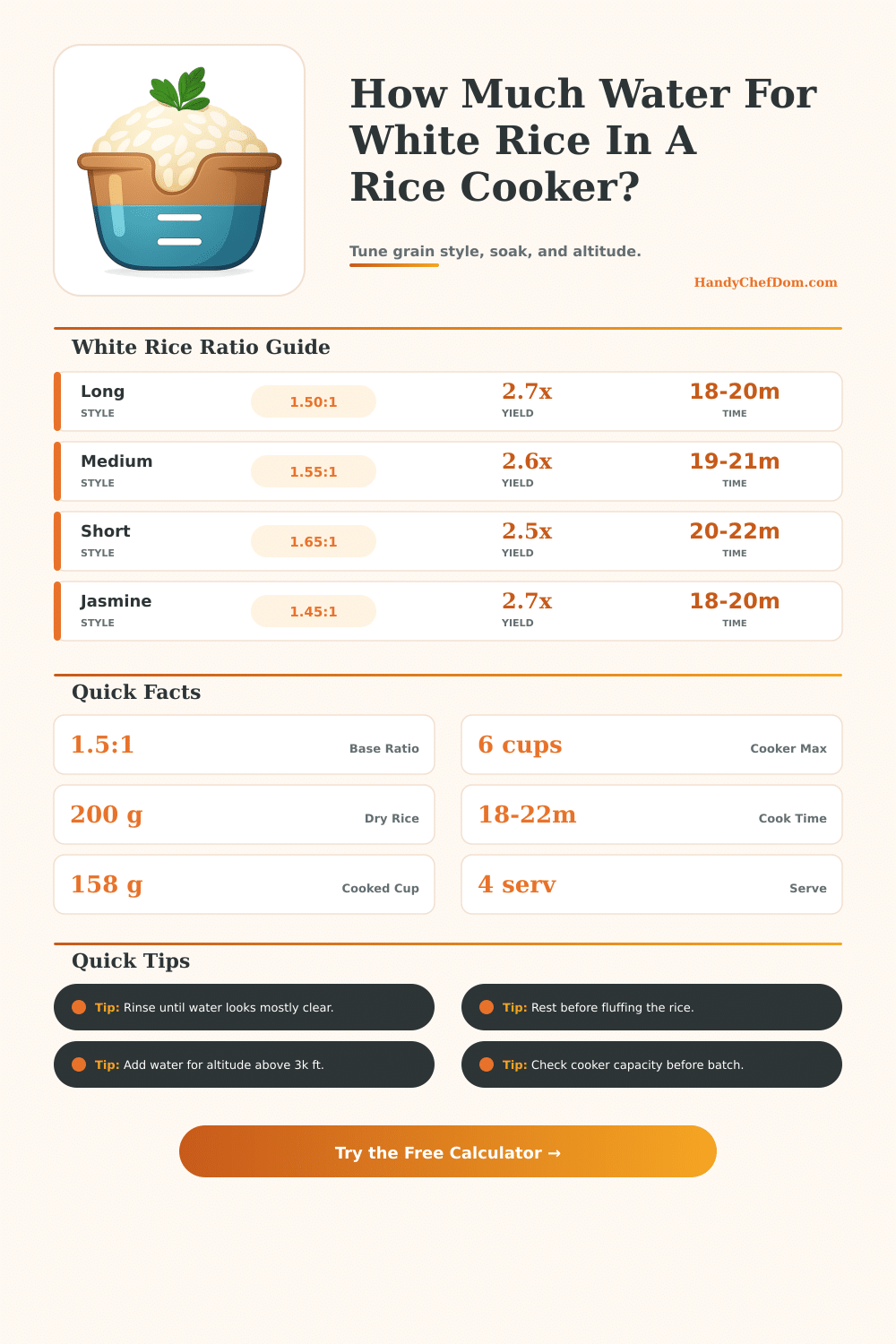
| Style | Ratio | Yield | Time |
|---|---|---|---|
| Long | 1.50:1 | 2.7x | 18-20m |
| Medium | 1.55:1 | 2.6x | 19-21m |
| Short | 1.65:1 | 2.5x | 20-22m |
| Jasmine | 1.45:1 | 2.7x | 18-20m |
| Altitude | Water | Time | Note |
|---|---|---|---|
| 0-1k | +0% | +0m | Sea lvl |
| 1k-3k | +2% | +3m | Mild |
| 3k-5k | +4% | +6m | High |
| 5k+ | +6% | +10m | Thin air |
| Dry | Cooked | Serve | Note |
|---|---|---|---|
| 1 cup | 2.7 c | 4 serv | Base |
| 2 cups | 5.4 c | 7 serv | Family |
| 4 cups | 10.8 c | 14 serv | Meal prep |
| 6 cups | 16.2 c | 22 serv | Bulk |
| Cooker | Dry Max | Water Max | Use |
|---|---|---|---|
| Mini | 3 cups | 4.5 c | Solo |
| Small | 5 cups | 7.5 c | Couple |
| Std | 6 cups | 9.0 c | Family |
| Large | 8 cups | 12 c | Batch |
To cook rice successfuly, you must understand the importance of the water ratio need. The water ratio will determine the texture of the cooked rice. If the ratio of water to rice are too high, the rice will cook to become gummy and sticky.
However, if the ratio of water to rice is too low, the rice will become dry and hard. Many people who cooks the rice end up with incorrect textures because not all rice varieties requires the same amount of water. White rice come in several varieties.
How Much Water to Use for White Rice
Each variety of white rice has a different structure of starch. Long-grain rice is a variety of white rice that will remain separate when cooked and is ideal for stir-fry. Medium grain rice is a variety of white rice that has a medium texture and is softer than long grain rice yet less sticky than short grain rice.
Short grain rice is a variety of white rice that tends to be tender when cooked and sticky, making it ideal for rice dishes with sauces. Jasmine rice is a variety of white rice that have a fragrance. Basmati rice is a variety of white rice that will remain separate when cooked.
Because each variety of white rice contains a different structure of starch, each variety require a different amount of water to be added when cooking. Depending on the appliance you use to cook the rice, there is different steps that you must take. Using a rice cooker, for example, you must make sure that the amount of rice you place into the rice cooker does not exceed the maximum amount that the rice cooker can hold.
If you use too much rice, the rice may overflow or cook unevenly. First, you must rinse the rice in water before adding the rice to the rice cooker. By rinsing the rice, you remove some of the excess starch from the rice.
By removing the excess starch, you prevent the rice from becoming gummy when cooked. After rinsing the rice, soak it for twenty minute before cooking. Soaking the rice allows the rice to hydrate even before cooking, ensuring that the rice will have an even texture when cooked.
The altitude at which you live may also play a role in how you prepare and cook the rice. If you live at a high altitude, the air is thinner and the water within the rice evaporate faster. Because the water evaporates quickly, you must add more water to the rice to compensate for the rapid evaporation.
If you do not add more water to the rice, the rice will be dry. Depending on the amount of rice that you are cooking, the cooking times will change. For example, a small batch of rice will take less time to cook than a large batch.
A batch of long grain rice that is small in amount will take eighteen minutes to cook while a large batch of the same type of rice may take twenty-two minutes or longer to cook when using a rice cooker. After the rice cooker successfully cooks the rice, you must allow the rice to rest with the lid on the rice cooker. This resting period allow the steam that is within the rice to redistribute, which will fluff the rice without drying it out.
One cup of dry rice will yield approximately two and a half cups of cooked rice. To prepare a meal that serve four people, one cup of dry rice will produce a sufficient amount of cooked rice to serve four people. When rice is cooked, the starch within the rice expand and the water within the rice turns to steam, thereby tripling the volume of the rice.
A baseline ratio of water to rice is in the ratio of one and a half parts water to one part rice. However, depending on the variety of rice that you are using, you may have to adjust this ratio. For example, jasmine rice may require a water to rice ratio of 1.45 parts water to one part rice while short grain rice may require 1.65 parts water to one part rice.
If you are cooking rice at high altitudes, you may have to add more water to the rice. If the rice has been rinsed extensively, you may have to adjust the amount of water that you use. Many people make mistakes when cooking rice.
Some people may treat rice like pasta. When cooking pasta, many people place the pasta in a large amount of water and drain it when done cooking. However, when using a rice cooker, the rice is steamed.
If you use too much water when cooking rice in a rice cooker, the rice may over-soften. Using too little water in a rice cooker will cause the bottom of the rice to burn. To avoid these mistakes, always rinse the rice prior to cooking.
Additionally, dont add too much rice to a rice cooker. Finally, allow the rice to rest for ten minutes after cooking the rice in the rice cooker. This resting period allows the moisture within the rice to become even throughout the rice.
Additionally, the variety of rice that you use for cooking should be matched with the type of meal that you are preparing. By matching the type of rice with the type of meal, the rice will have the correct texture to eat well with the other components of the meal.