🍗 Ground Turkey Protein Calculator
Estimate protein, calories, fat, raw weight, cooked yield, and per-serving portions for ground turkey crumbles, patties, tacos, bowls, and meal prep.
Choose whether your weight is raw or cooked, match the lean percentage on the package, and set the number of servings you want to divide the batch into.
Cooked serving for bowls, plates, and skillet meals.
Cooked patty serving for a fuller protein portion.
Cooked filling estimate before toppings or shells.
Cooked protein box serving for higher protein meals.
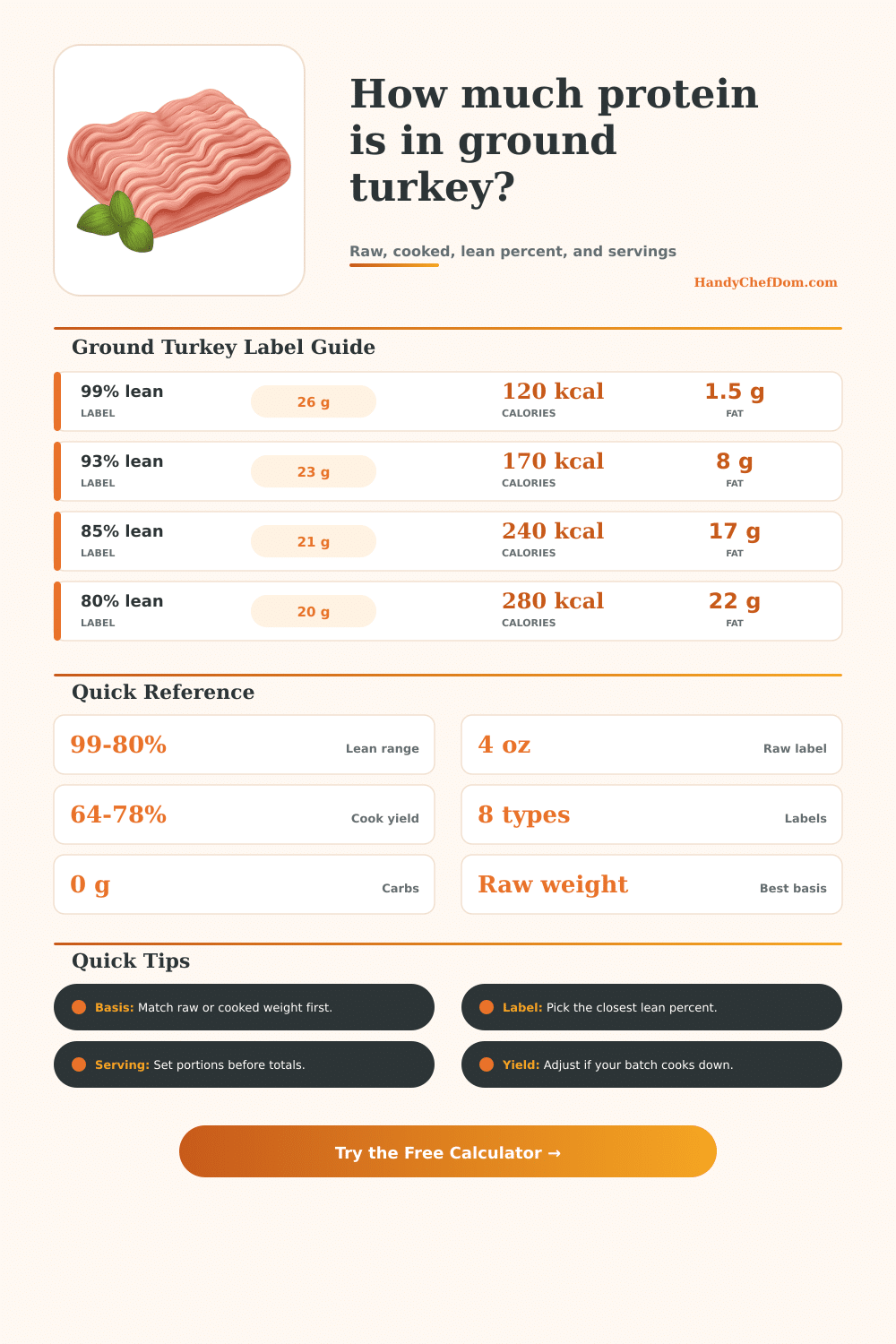
| Ground Turkey Label | Protein per 4 oz raw | Calories per 4 oz raw | Fat and Yield |
|---|---|---|---|
| 99% lean ground turkey | 26 g | 120 kcal | 1.5 g fat, 78% yield |
| 97% lean ground turkey | 25 g | 150 kcal | 4 g fat, 76% yield |
| 93% lean ground turkey | 23 g | 170 kcal | 8 g fat, 74% yield |
| 90% lean ground turkey | 22 g | 190 kcal | 11 g fat, 72% yield |
| 85% lean ground turkey | 21 g | 240 kcal | 17 g fat, 68% yield |
| 80% lean ground turkey | 20 g | 280 kcal | 22 g fat, 64% yield |
| 93% seasoned ground turkey | 22 g | 190 kcal | 10 g fat, 75% yield |
| 85% dark ground turkey | 21 g | 245 kcal | 18 g fat, 67% yield |
| Use Style | Cooked Serving | Cups Per Pound Cooked | Calculator Note |
|---|---|---|---|
| Crumbles or skillet bowls | 3.5 oz | About 3 cups | Default for loose cooked turkey. |
| Patty portions | 4 oz | Not cup based | Slightly lower yield from shaped portions. |
| Taco filling portions | 3 oz | About 3.2 cups | Smaller serving for taco-style plates. |
| Rice bowl topping | 4.5 oz | About 3 cups | Heavier cooked topping portion. |
| Sauce or pasta crumble | 3 oz | About 3.3 cups | Smaller protein amount in a mixed dish. |
| Meal prep protein boxes | 5 oz | About 3 cups | Larger planned protein serving. |
| Planned Servings | Crumbles Raw Start | Taco Raw Start | Meal Prep Raw Start |
|---|---|---|---|
| 4 servings | 1.2 lb raw | 1.0 lb raw | 1.7 lb raw |
| 6 servings | 1.8 lb raw | 1.5 lb raw | 2.5 lb raw |
| 12 servings | 3.6 lb raw | 3.0 lb raw | 5.0 lb raw |
| 25 servings | 7.4 lb raw | 6.3 lb raw | 10.6 lb raw |
| 50 servings | 14.8 lb raw | 12.7 lb raw | 21.1 lb raw |
| Raw Weight | Cooked 93% Lean | Protein Estimate | Standard Crumble Servings |
|---|---|---|---|
| 1 lb raw | 11.8 oz cooked | 92 g protein | 3.4 servings |
| 1.25 lb raw | 14.8 oz cooked | 115 g protein | 4.2 servings |
| 1.5 lb raw | 17.8 oz cooked | 138 g protein | 5.1 servings |
| 2 lb raw | 23.7 oz cooked | 184 g protein | 6.8 servings |
| 3 lb raw | 35.5 oz cooked | 276 g protein | 10.1 servings |
| 5 lb raw | 59.2 oz cooked | 460 g protein | 16.9 servings |
There’s something about standing in the freezer aisle clutching a bag of ground turkey while you vaguely plan dinner. On one side is the turkey, and on the other side is a label filled with numbers. Those numbers feel closer to algebra than diet information when you try to relate them to nutritional advice. Then recall how much meat shrinks when cooking. Ground meat even more so, and you’re left guessing what exactly will fit onto your plate. Everyone eyeballs their protein, usually by estimating visually, but seeing isn’t believing. As fat melts during cooking, the dense concentration of protein in the final dish overwhelms our eyes ability to estimate its size.
How can we get from raw weight on the package to cooked reality in our skillet? But that’s where the confusion typically begins: on what to measure. Packages provides nutrition information as if meat were still raw. This is standard practice for regulatory purposes, but it is of no use when you’re trying to weigh out food that’s been sitting in a pan cooking for the last twenty minutes. Because all that cooking does is melt fat and drive off water, a pound of ninety-three percent lean raw turkey ends up being about three-quarters of a pound of cooked product. Not only is there less volume, but the remaining stuff pack more protein into each ounce.
How to Measure Cooked Turkey Weight
Use calculator up top to do this math for you. Just plug in your desired lean percentage and starting weight, and you won’t have to tweak the moisture-loss factor each time you change your heat level. Your protein consumption isn’t as relevant to the calorie content of what you eat than the lean percentage is. A drop in lean percentage from ninety-nine all the way down to, say, eighty will probably take two or three grams away from each serving. However, it will adds almost twice the fat, along with another solid block of calories.
That’s how many people end up getting reeled into this trap: Trying to save money by purchasing less-expensive (i.e., fatter) cuts of meat, without understanding the metabolic cost. Sure, you’re enjoying something juicier and more flavorful…but if you’re tightly monitoring your macros? Not so much.
The size of a serving varies from form to form, too. Three ounces of ground turkey in a taco will seem less filling than three ounces in a burger, because the latter retains some shape while the former melts down. Four ounce of burger feels like much more food than three ounces of turkey scrambled with sauce; it is the same amount of meat, just presented differently. That’s reflected in the reference table found on the page, which offers guidelines for typical portion sizes based off preparation style.
This is useful if you’re looking to feed yourself at home versus having a party where people can help themselves. It also helps if you’re planning to make meal-sized portions to stick in lunchboxes versus something intended to serve individual taco. If you’re folding your turkey into a sauce, you’ll probably end up eating more, and this recognize that reality.
Another thing that adds variability is how much fat you drain. Sure, you can goes with the typical “drain” option. Even then, there’s still oil left behind in the meat fibers. Or what about the oil that settled on the bottom of whatever container you scooped into? Fine-tuning for this prevents your estimates from becoming too rosy-eyed (and helps keep them realistic). Sure, you drained every last drop of grease off the meat, but not quite.
After a week of cooking, all those tiny differences will adds up to big changes in how much you eat in total. It’s more like calibrating than it is keeping exact account books. It’s less about doing things perfectly. It’s more about doing them consistently over time. This way, you learn how the nutrition change from one batch to the next and what to expect from your future batches.
Once you have a sense for how much your particular batch shrank and therefore how many nutrients was left, you’re no longer guessing; and that means you can plan ahead. Next time you’re making a big pot of turkey chili or lettuce wraps, you’ll know exactly how close they are to hitting your targets. Because suddenly you see the “nutrition numbers” behind the meal in front of you, you get a sense for why this batch was closer than the last and you know exactly which tweaks to apply to your next one.
You should of known it would be tricky.